

HISTORICAL ARCHIVES
Explore the Second Air Division Historical Archives, a growing collection of material intended to preserve the experiences of the men who served and provide resources for families, historians, and future researchers. The archives bring together historical documents, photographs, Second Air Division journals, prisoner-of-war material, personal accounts, unit information, wartime records, and other resources relating to the Second Air Division and the Eighth Air Force.
Many of these journals provide details that cannot be found in a traditional unit history. They record individual experiences, reunions, memories, aircraft, missions, friendships, losses, and the continuing efforts of veterans and their families to preserve this history. By making these resources accessible in one location, the project seeks to protect material that might otherwise be scattered or lost and keep it available for generations to come.
SEARCH ALL NAMES
Search the entire Second Air Division website for an individual serviceman by last name. Once you locate and open the relevant page, use Ctrl+F to search for the serviceman’s name on that page.
This search is designed to help families, historians, and researchers locate information that may appear throughout the site's many historical collections. A single surname can lead to references in the Roll of Honor, Overseas Burials, Missing in Action records, Bomb Group and Fighter Group histories, wartime airfield pages, photographs, and other historical material.
You do not need to know the man's unit or where his name might appear. Begin with a surname, or enter a full name to narrow your search. Because information about one serviceman may be found in several different parts of the website, this is often the best place to begin your research into someone who served with the Second Air Division.
ROLL OF HONOR
The Second Air Division Roll of Honor remembers the men who lost their lives while serving with the Bomb Groups and Fighter Groups of the Second Air Division during World War II. It is both a memorial and a continuing historical research project intended to preserve their names and service for future generations.
Visitors can search or browse the Roll of Honor by name and group unit and explore related information concerning Missing in Action personnel and those buried in overseas American military cemeteries. The collection reflects years of research comparing historical records and identifying names that were missing, misspelled, or incorrectly recorded in earlier sources. Whenever possible, additional information is provided to help families and researchers identify the individual serviceman and understand his connection to the Second Air Division.
FIGHTER GROUPS
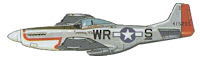
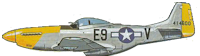
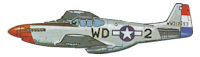
Explore the Fighter Groups associated with the Second Air Division and those pilots whose missions helped protect the heavy bomber formations and carry the air war to the enemy. Flying aircraft including the P-47 Thunderbolt, P-38 Lightning, and P-51 Mustang, these groups performed bomber escort, fighter sweeps, ground attacks, strafing missions, and other combat operations.
Each Fighter Group section brings together unit history, squadrons, commanders, aircraft, markings, wartime airfields, significant missions, photographs, and related historical material. Links to Roll of Honor information help preserve the names of those who died while serving with these organizations.
These pages provide a broader understanding of the essential relationship between the fighters and bombers and the combined effort required to conduct the Eighth Air Force's strategic air campaign.
BOMB GROUPS
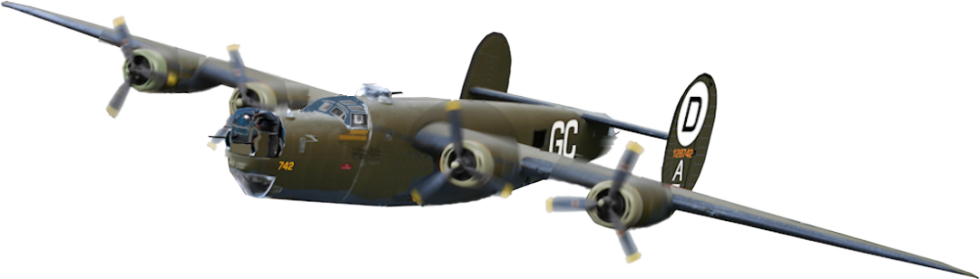
Explore the B-24 Liberator Bomb Groups of the Second Air Division and the men who flew the heavy bombers that operated from airfields across East Anglia during World War II. These histories follow the groups from their arrival in England through their combat operations over occupied Europe and Germany.
Individual group pages provide information about squadrons, commanders, aircraft markings, airfields, important missions, campaigns, awards, and photographs. Related Roll of Honor and burial records help connect the operational history with the human cost of the air war. Together, these pages are intended to provide descendants, historians, veterans' families, and researchers with a convenient starting point for understanding each Bomb Group's place within the larger history of the Second Air Division.
AIRFIELDS
Discover the wartime airfields of the Second Air Division and learn about the places in England from which thousands of American airmen went to war. Located primarily across East Anglia, these bases became temporary American communities containing runways, control towers, hangars, hardstands, technical areas, bomb dumps, maintenance facilities, hospitals, mess halls, and living quarters.
The airfield histories examine their construction, USAAF station numbers, wartime use, associated Bomb and Fighter Groups, facilities, photographs, maps, and important events. Where information is available, the story continues through the airfield's postwar history and what remains at the site today. These pages are intended to help visitors understand that the history of the Second Air Division occurred not only in the skies over Europe, but also at the English airfields that its airmen called home.
POW CAMPS
This is part of the Second Air Division Historical Research and Preservation Project, an independent effort of three members of the Heritage League and Greg Hatton, a recognized WWII POW researcher dedicated to preserving the experiences of the men whose war did not end when their aircraft went down.
These POWs went through interrogation, imprisonment, hunger, forced marches, escape attempts, and the long wait for liberation. Through his research, Greg helps ensure that their courage, endurance, and sacrifices remain an enduring part of the historical record.
Their POW experience remains an important part of the history of the Second Air Division, Eighth United States Army Air Forces, and of the price paid by the airmen who carried the air war into occupied Europe and Germany.
Their aircraft may have been lost, but their service did not end when they became prisoners of war.