
(Click on aircraft image below for individual group history)
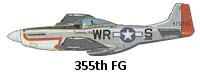
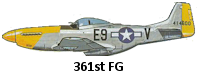
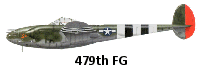

The fighter groups of the Second Air Division played a crucial—though often less widely recognized—role in the air war over Europe during World War II. Operating under the umbrella of the United States Army Air Forces and more specifically the Eighth Air Force, the Second Air Division was primarily known for its heavy bomber units flying B-24 Liberators. However, its associated fighter support—whether directly attached or closely coordinated—was essential in ensuring the success and survival of these long-range bombing missions.
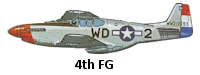
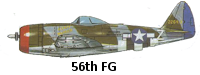
Fighter groups assigned to support the Second Air Division were tasked with escorting bombers deep into enemy territory, protecting them from interception by German fighters and anti-aircraft defenses. Early in the war, the lack of long-range escort fighters resulted in heavy losses, highlighting the need for aircraft capable of accompanying bombers all the way to their targets and back. This challenge was eventually met by aircraft such as the P-51 Mustang and P-47 Thunderbolt, which dramatically improved bomber survivability and shifted the balance of air superiority in favor of the Allies.
Before long-range escort (1942–early 1943): bomber losses on some missions exceeded 15–20%, considered unsustainable. After widespread P-51/P-47 escort (late 1943–1945): losses often dropped to under 5% per mission, even over heavily defended Germany.
By early 1944 (around “Big Week”), German fighter losses surged due to aggressive escort tactics Allied fighters increasingly shot down German aircraft faster than they could be replaced, contributing to air superiority before D-Day.
Beyond escort duty, these fighter groups also carried out offensive sweeps, strafing missions, and attacks on enemy airfields, transportation networks, and infrastructure. By targeting the Luftwaffe both in the air and on the ground, they weakened Germany’s defensive capabilities and contributed to the broader strategic bombing campaign. Their efforts helped pave the way for major operations such as the invasion of Normandy, where air superiority proved decisive.
While the Second Air Division itself doesn’t have a clean, standalone set of “fighter group statistics,” the fighter forces supporting it were part of a massive and highly effective system. Their combined efforts drastically reduced bomber losses, inflicted heavy damage on German air power, and helped secure Allied control of the skies over Europe by 1944–45.
The story of the Second Air Division’s fighter support offers a compelling look at adaptation, technological innovation, and the courage of the pilots who flew into some of the most dangerous skies of the war. It’s a testament to how coordination between bombers and fighters evolved into a highly effective system that ultimately contributed to Allied victory in Europe.