RAF DEBDEN AIR BASE
HOME OF THE 4TH FIGHTER GROUP
The home of the famous 4th Fighter Group was RAF Debden, one of the best-known fighter stations of the U.S. Eighth Air Force. From September 1942 until July 1945, Debden was home to the highest-scoring fighter group in U.S. Army Air Forces history, credited with destroying more than 1,000 enemy aircraft during the war.
Overview
- Location: Essex, England, about 40 miles (65 km) northeast of London
- RAF Station: Opened in 1937 as an RAF Fighter Command station
- USAAF Designation: Station F-356 (also known as USAAF Station 356)
- USAAF Occupation: September 1942 – July 1945
- Primary Unit: 4th Fighter Group (334th, 335th, and 336th Fighter Squadrons)
Building RAF Debden
Construction of RAF Debden began in 1936 on farmland near Saffron Walden in Essex. The station officially opened on 22 April 1937 as one of Britain's modern fighter bases. Before the war it was home to several RAF fighter squadrons flying aircraft such as the Hawker Fury, Gloster Gladiator, Hawker Hurricane, and later the Supermarine Spitfire. During the Battle of Britain period, Debden played an important role in the defense of southeastern England.
Before the Americans
RAF Debden was already a distinguished fighter station before the United States arrived.
During the:
- Battle of Britain
- Blitz
- Offensive fighter sweeps over occupied Europe
The station housed several RAF fighter squadrons flying aircraft such as the Hawker Hurricane, Supermarine Spitfire, Gloster Gladiator, and Bristol Blenheim. The Luftwaffe bombed Debden several times during 1940, damaging runways and buildings, but the station remained operational throughout the battle.
Arrival of the Americans
After the United States entered the war, Debden was transferred to the USAAF on 12 September 1942, becoming USAAF Station 356.
On 29 September 1942, one of the most significant ceremonies of the air war took place. The three famous RAF Eagle Squadrons—composed largely of American volunteers who had fought for Britain before the United States entered the war—were transferred to the US Army Air Forces.
The squadrons became:
- No. 71 Squadron RAF to 334th Fighter Squadron
- No. 121 Squadron RAF to 335th Fighter Squadron
- No. 133 Squadron RAF to 336th Fighter Squadron
Together they formed the 4th Fighter Group, preserving the traditions and combat experience they had earned while serving with the RAF. The ceremony was attended by senior RAF and USAAF leaders, symbolizing the close Anglo-American alliance.
The Airfield
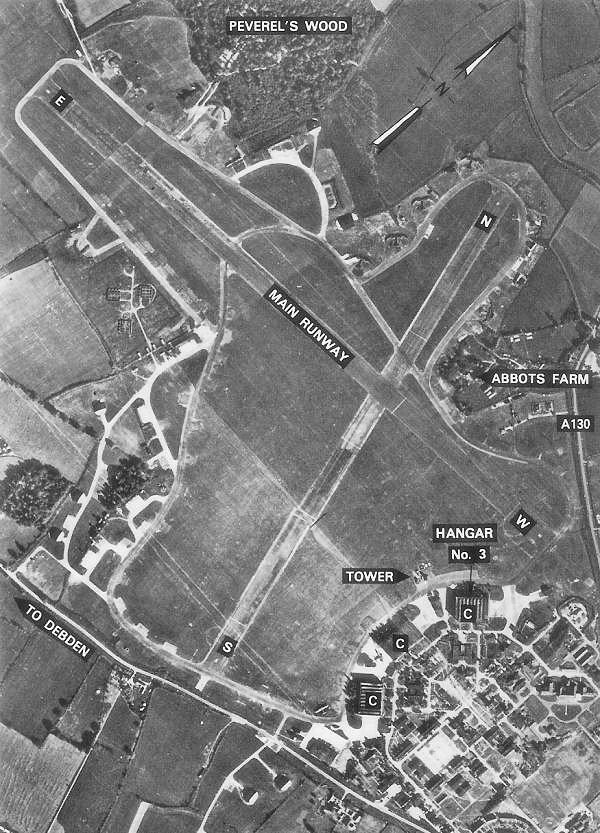
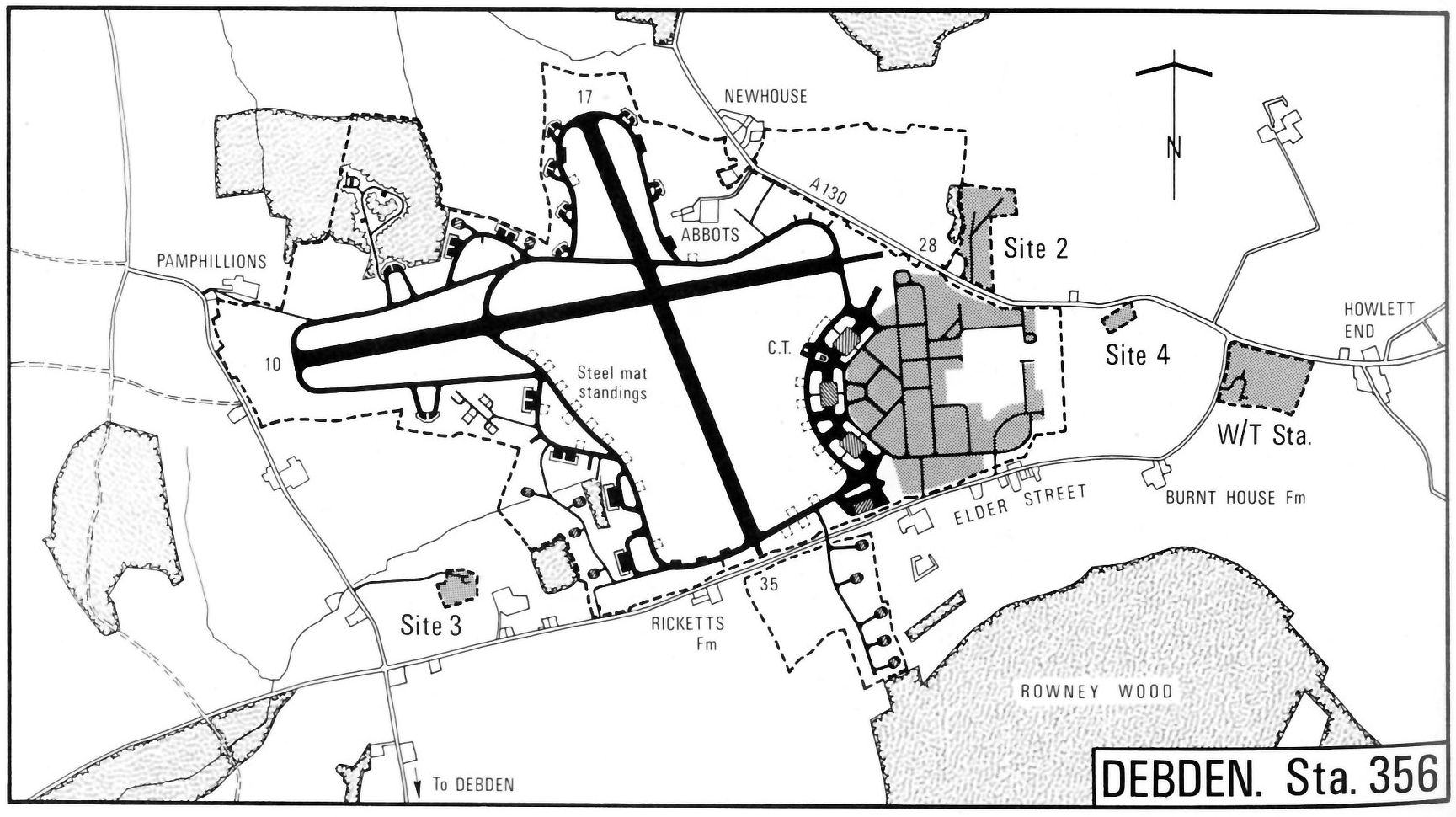
When occupied by the Americans, Debden featured:
- Three concrete runways
- Three large C-type hangars
- One Bellman hangar
- Approximately 64 aircraft dispersal hardstands
- Fourteen blast pens
- Housing for roughly 2,000 personnel
- Extensive maintenance and ammunition areas
Runway Configuration
- Initial Grass Field: When it opened in 1937, Debden relied entirely on a wide, open grass landing area.
- Hard Surface Conversion: As aircraft grew heavier and faster, the grass was stripped. In 1940, permanent concrete runways were laid to handle frontline operations.
- The Main Runway: The primary runway was Runway 09/27 (later re-designated 10/28), running East-West. Later in the war, work was undertaken to extend this main strip westward to accommodate heavily laden fighters fitted with external fuel drop-tanks.
- The Auxiliary Runway: To allow safe takeoffs and landings in crosswinds, a intersecting secondary runway, Runway 17/35, crossed the main strip diagonally.
- Topography: The flying field featured a distinct crowned topography-sloping subtly downward toward the edges from a high center point.
The Technical Area & Hangars
- The Curved Apron: Located in the southeast corner of the airfield, a large, sweeping concrete apron directly faced the landing field.
- Type-C Hangars: Standing along this curved apron were three massive Type-C brick hangars. These 7-bay long hangars were built at sharp, staggered angles relative to one another. This specific alignment famously left the ends of the hangars open to clear access from both directions.
- Dispersed Parking: To prevent the Luftwaffe from wiping out entire squadrons on the ground, the airfield featured a looping perimeter track lined with roughly 80 hardstands and 11 fabric-covered Blister hangars. Aircraft were scattered wide across these defensive blast pens.
Command & Infrastructure Buildings
- Watch Office (Control Tower): Positioned directly in front of the main technical area facing the runways, the control tower (originally a Type 207/38 design) managed active air traffic.
- Operations Block: Debden featured a heavily protected, specialized Sector Operations building. This structure included a sunken central tracking well with a raised wrap-around balcony where plotters manually tracked incoming enemy air raids during the Battle of Britain.
- The "Garden City" Domestic Site: Positioned cleanly behind the technical line stood the permanent brick domestic quarters, including an impressive Neo-Georgian Officer's Mess, air-raid shelters, and an armory.
The airfield had been modernized with paved runways during the war and was considered one of the better-equipped fighter stations in southeast England.
Life at Debden
RAF Debden became a bustling American fighter station housing approximately 2,000 personnel. It featured:
- Three large C-type hangars
- A fortified control tower
- More than 60 aircraft dispersal points
- Maintenance shops
- Barracks
- Officers' club
- Briefing rooms
- Recreation facilitiesv
Pilots often flew two or three combat missions per day, while ground crews worked around the clock to keep aircraft ready. The station developed a close relationship with the nearby towns and villages, and many lifelong friendships were formed between American servicemen and local residents.
After the War
The 4th Fighter Group departed Debden in July 1945.
The station was later returned to RAF control and eventually closed as an active military airfield. Much of the original airfield has since returned to farmland, although several wartime structures—including the control tower and some hangars—still survive. The nearby village and local museum continue to preserve the history of the base and the men who served there.
Today, much of the original wartime airfield has disappeared beneath farmland and light industry, but important reminders remain:
- The restored control tower
- Memorials honoring the 4th Fighter Group
- Portions of the original perimeter track
- The nearby villages that still commemorate the "Debden Eagles"
Each year, veterans' families, aviation historians, and members of the 4th Fighter Group Association visit Debden to honor the airmen who flew from the station.
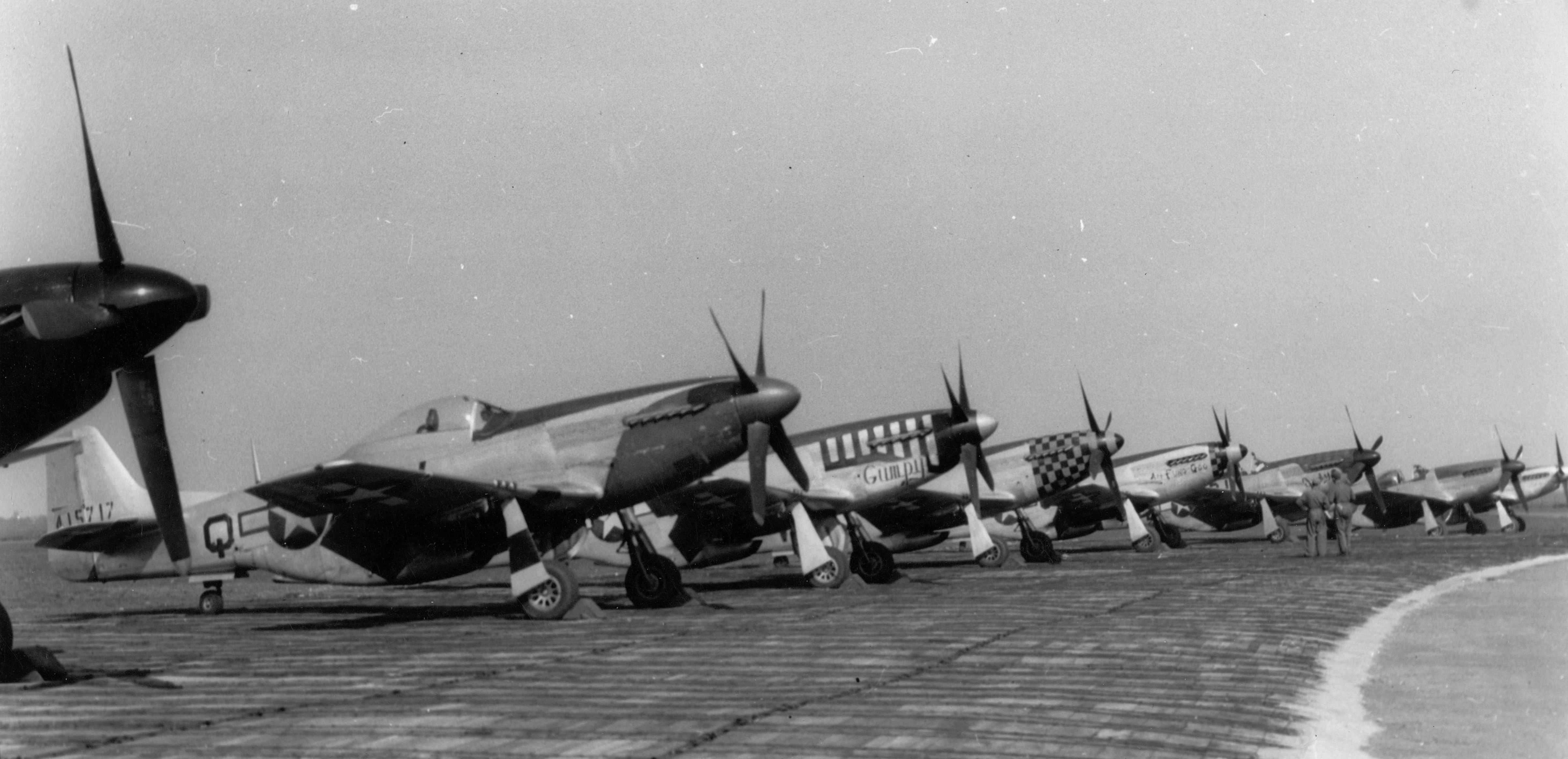
On Runway
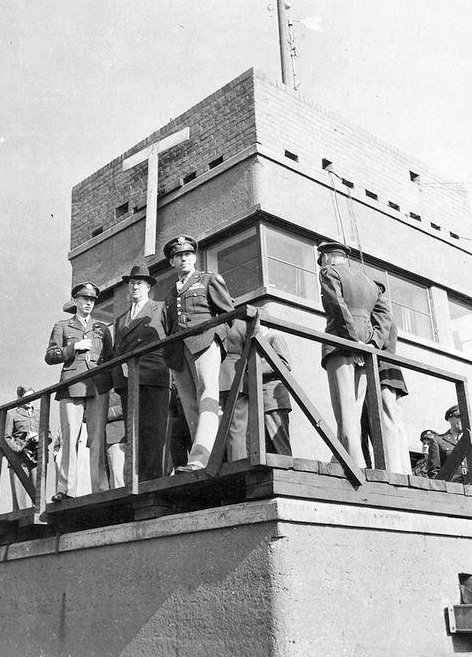
Control Tower