HORSHAM ST FAITH
HOME OF THE 458th BOMB GROUP
RAF Horsham St Faith was a major wartime airfield situated approximately four miles north of Norwich in Norfolk, England. Built during the expansion of the Royal Air Force immediately before the Second World War, it developed from a permanent RAF bomber station with a grass landing field into a large, fully paved American heavy-bomber base. The United States Army Air Forces designated it Station 123, while the station identification code was HF. The site later became Norwich Airport, but much of its wartime layout and several original buildings survived into the modern period.
Selection and Construction of the Airfield
The location north of Norwich was selected during the late 1930s as Britain expanded its air defenses and bomber forces in anticipation of a possible European war. The surrounding landscape consisted largely of open, gently rolling farmland that could be cleared and adapted for flying operations. Its position also placed the airfield close to Norwich’s road and railway connections while leaving sufficient space for hangars, workshops, barracks and other supporting facilities.
Construction began in 1939. Unlike many later wartime airfields that were built rapidly with temporary structures, Horsham St Faith was designed as a permanent RAF station. Its original buildings included substantial brick barrack blocks, administrative offices, messes, workshops and five large C-type aircraft hangars. The station officially opened for operational use on 1 June 1940. At that time, aircraft operated from a broad grass flying field rather than paved runways. :contentReference[oaicite:1]{index=1}
The Original Grass Flying Field
The first airfield did not have the familiar triangular concrete runway system visible in later aerial photographs. Instead, aircraft took off and landed across the grass field according to wind direction. This arrangement offered flexibility to relatively light aircraft but had serious disadvantages during prolonged wet weather. Heavy rain could soften the ground, cause aircraft to become bogged down and restrict flying operations.
The grass landing area was surrounded by the station’s technical and domestic facilities. Aircraft were stored and maintained in the five large hangars, while workshops nearby handled engines, instruments, radios, armament and airframe repairs. The permanent nature of the station distinguished it from the dispersed collection of Nissen huts found at many airfields constructed later in the war.
The Technical Site
The technical site formed the working center of RAF Horsham St Faith. It contained the hangars, maintenance shops, stores, administrative offices, motor-transport facilities and other buildings required to keep an operational airfield functioning. Aircraft arriving from the flying field entered the technical area for inspection, servicing and repair.
The five C-type hangars were among the airfield’s most prominent structures. These large steel-framed buildings provided protected working areas where aircraft could undergo maintenance regardless of the weather. Around them stood specialist workshops for engines, electrical equipment, radios, instruments, hydraulic systems and armament.
Fuel, spare parts, tools and equipment had to be stored and distributed efficiently. Maintenance personnel worked in shifts so that aircraft could be inspected, repaired and prepared at all hours. The technical site therefore remained active both day and night whenever operational flying was underway.
Domestic and Communal Sites
RAF Horsham St Faith was more than a flying field. It was a military community containing accommodations and services for thousands of personnel. The domestic sites included barracks, officers’ and sergeants’ messes, dining halls, kitchens, washrooms, medical facilities and administrative buildings.
Additional facilities included a station hospital or sick quarters, chapel, recreation rooms, stores, sports grounds and buildings devoted to education and entertainment. Separate areas housed motor-transport personnel, maintenance specialists, communications staff, military police and other station units.
Where practical, accommodation and communal buildings were separated from the flying and technical areas. This reduced congestion near the aircraft and limited casualties if the operational portion of the station was attacked. Personnel moved between the dispersed sites by road, bicycle, military vehicle or on foot.
Transfer to the United States Army Air Forces
In September 1942, Horsham St Faith was made available to the United States Army Air Forces and became USAAF Station 123. Its location in East Anglia made it valuable to the Eighth Air Force, whose growing network of bases stretched across Norfolk, Suffolk and neighboring counties.
The Americans initially used the existing grass airfield and permanent RAF facilities. However, the growing size and weight of combat aircraft soon demonstrated the need for paved runways, expanded taxiways and stronger aircraft parking areas. Horsham St Faith therefore underwent a major redevelopment that changed both its appearance and its operational capacity.
Conversion into a Heavy-Bomber Airfield
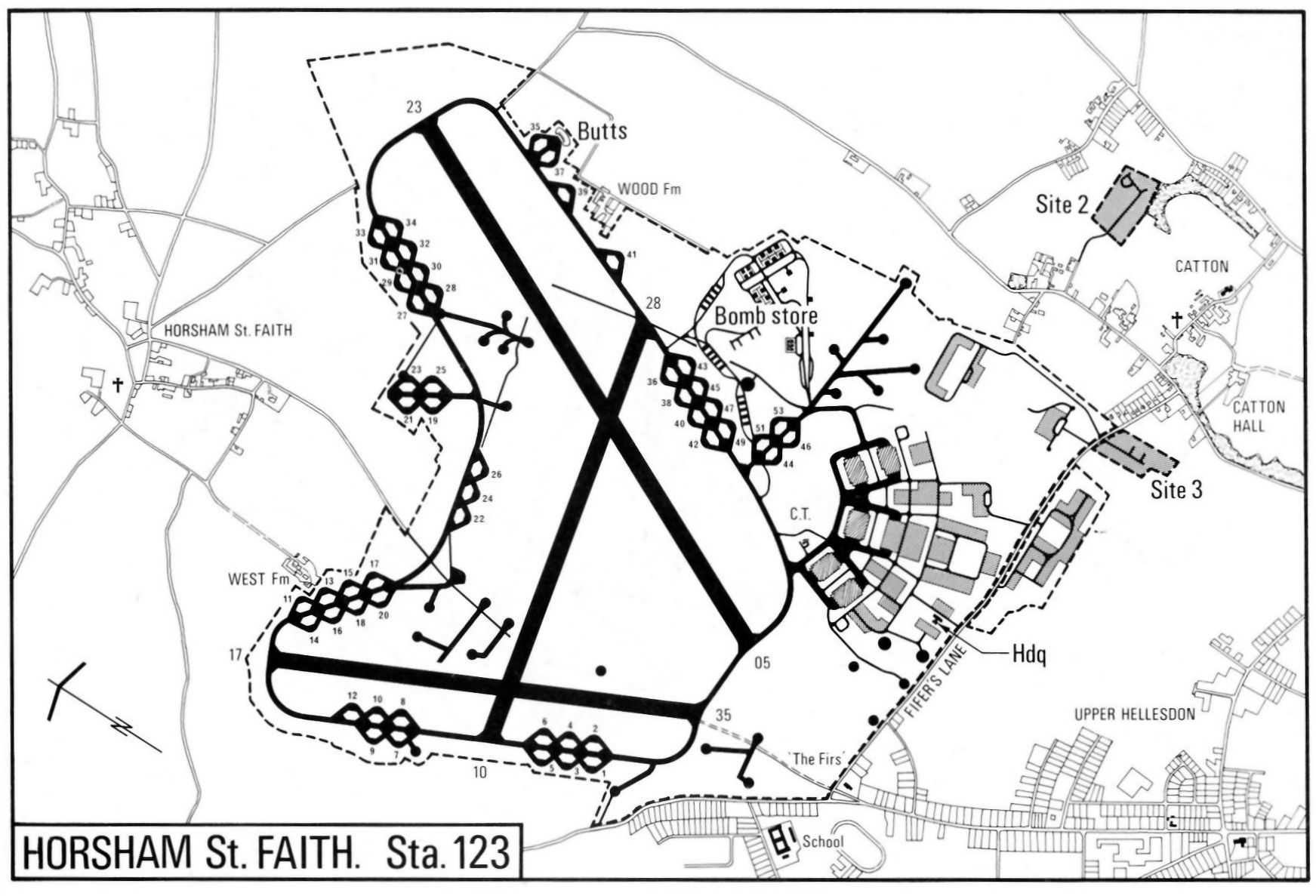
During 1943, extensive construction transformed Horsham St Faith into a heavy-bomber station. Three intersecting concrete runways were laid out in the standard wartime triangular pattern. The longest runway measured approximately 2,000 yards, while the two subsidiary runways were approximately 1,400 yards long. The paved surfaces allowed heavily loaded aircraft to operate in conditions that would have made the former grass field unusable.
A continuous concrete perimeter track was constructed around the airfield. This allowed aircraft to travel between the runways, hardstandings and technical site without obstructing other aircraft. Entrance and exit points were arranged to reduce congestion during large-scale departures and recoveries.
The construction required major earthmoving and drainage work. Fields were cleared, hedgerows removed, roads altered and large quantities of concrete laid. Drainage was especially important because standing water or frost damage could weaken runway and taxiway surfaces. The result was a much larger and more complex airfield than the station that had opened in 1940.
The Triangular Runway System
The triangular runway arrangement allowed aircraft to take off and land into the prevailing wind under a variety of weather conditions. The main runway was normally used whenever wind direction permitted, while the subsidiary runways provided alternatives during crosswinds or emergencies.
Each runway was connected to the perimeter track through taxiways and turning areas. At busy periods, aircraft could be positioned in sequence around the perimeter before being directed onto the runway. Returning aircraft could leave the runway quickly, allowing the next aircraft to land.
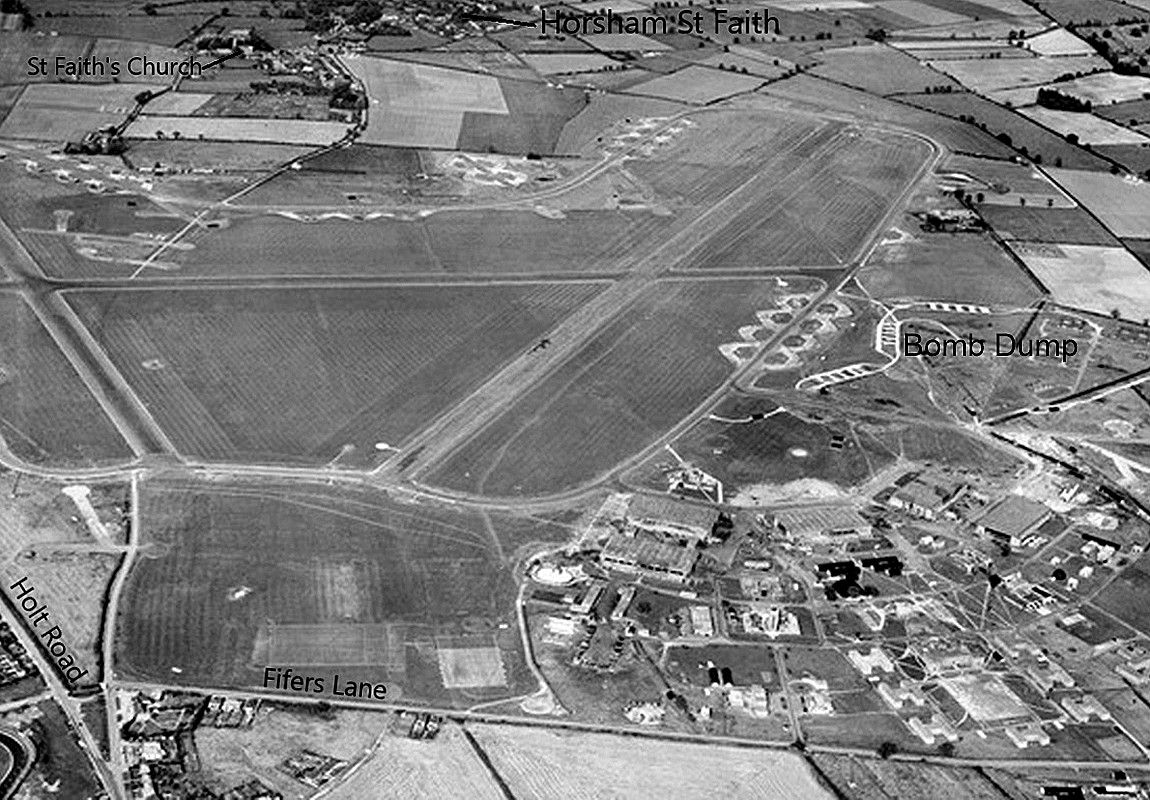
Wartime and immediate postwar aerial photographs clearly show the triangular pattern of the three runways, the encircling perimeter track, the dispersed aircraft parking areas and the concentration of technical buildings along one side of the field.
Aircraft Dispersal Hardstandings
Numerous concrete hardstandings were built around the perimeter track to provide parking spaces for individual aircraft. These dispersals reduced the danger of concentrating many aircraft in one location. If the airfield were bombed or strafed, damage to one parking area would be less likely to destroy an entire unit’s aircraft.
Each hardstanding functioned as a small outdoor servicing area. Ground crews refueled aircraft, loaded equipment, checked engines, inspected tires and repaired minor faults while the aircraft stood on its dispersal. Service vehicles delivered fuel, oxygen, ammunition, tools, food and other supplies.
The hardstandings were connected to the perimeter track by short access spurs. Their placement around the field distributed aircraft across a wide area but also increased the distance that maintenance teams and vehicles had to travel.
Bomb Storage and Ammunition Areas
The bomb-storage area was positioned away from the main technical and domestic sites. Separation was essential because an accidental explosion could cause catastrophic damage. Bombs were stored in specially constructed areas protected by earthworks and served by internal roads.
Before a mission, bombs and other ammunition were prepared in the storage area and transported by specialist vehicles to the aircraft dispersals. Fuzes were handled under controlled conditions, and strict safety procedures governed the movement of explosives around the station.
Machine-gun ammunition, flares, pyrotechnics and other dangerous materials were also stored in protected locations. These areas were guarded and access was restricted to authorized personnel.
Fuel Storage and Distribution
A heavy-bomber airfield required enormous quantities of aviation fuel. Storage tanks and fuel installations were therefore located where they could be protected, replenished and connected to the station road system. Tanker vehicles carried fuel from the storage areas to aircraft parked around the airfield.
Refueling several dozen aircraft was a lengthy and hazardous operation. Crews had to prevent spills, control ignition sources and ensure that each aircraft received the correct amount of fuel. Fire crews remained prepared to respond to accidents during refueling and engine testing.
Control Tower and Flying Control
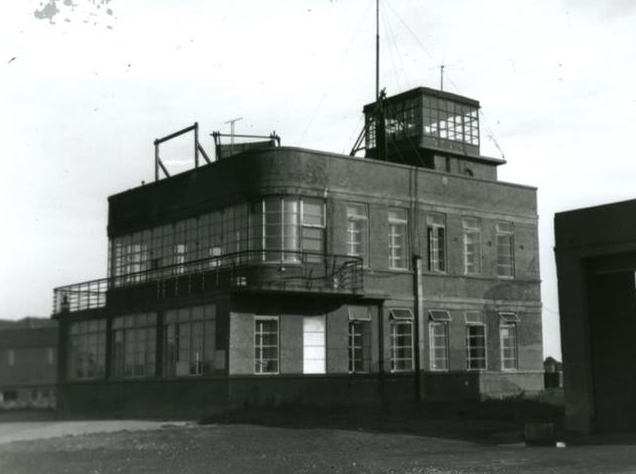
The control tower, commonly called the watch office, supervised movement on the runways and around the airfield. Flying-control personnel monitored wind direction, visibility, cloud conditions and runway activity. They coordinated departures and landings and maintained contact with aircraft by radio and signal lamps.
During large formations, aircraft departed at carefully spaced intervals. Controllers had to manage aircraft taxiing from widely scattered dispersals while keeping the runway clear. Recovering formations created similar pressure, especially when damaged aircraft required priority landings.
The wartime control-tower structure survived the war, although the site was later adapted and supplemented by modern airport facilities.
Navigation, Lighting and Communications
The station contained communications and navigational facilities that allowed aircraft to operate in poor weather and darkness. Radio rooms maintained contact with aircraft and other stations. Direction-finding equipment could assist crews that were uncertain of their position, while airfield lighting marked runways and approach paths when night operations were authorized.
Ground communications connected the control tower, operations rooms, weather office, maintenance sections, fire station and other essential departments. Telephone lines and messenger services allowed orders and information to move quickly around the widely dispersed base.
Weather observers played a vital role. Fog, low cloud, icing and strong winds could make flight operations dangerous. Reports were gathered locally and combined with regional forecasts to determine whether aircraft could depart and whether conditions would permit their safe return.
Airfield Defenses and Security
Because Horsham St Faith was an operational airbase, it required protection against air attack, sabotage and unauthorized entry. Defensive positions, guard posts and security patrols were placed around the station. Aircraft, fuel storage, bomb dumps and communications installations received particular attention.
Light anti-aircraft weapons and ground-defense positions formed part of the station’s protective system. Air-raid shelters and blast protection were provided near important work areas so that personnel could take cover during warnings.
The airfield perimeter was patrolled, and access roads were controlled by military police and guards. Blackout regulations restricted visible lighting at night, while camouflage and dispersed construction helped make the base less conspicuous from the air.
Airfield Fire and Rescue Services
Fire and rescue personnel were essential at a station handling large, fuel-laden aircraft and high explosives. Fire tenders were positioned so they could quickly reach runway accidents, burning aircraft, hangars or fuel installations.
Emergency crews remained on alert during takeoffs and landings, when aircraft were most vulnerable. A heavily loaded aircraft could suffer engine failure, tire damage or loss of control during its takeoff run. Returning aircraft might arrive with battle damage, wounded crewmen, failed landing gear or very little fuel.
Ambulances and medical teams worked closely with firefighters. Runways had to be cleared rapidly after an accident so that other aircraft could continue landing safely.
Roads, Transport and Station Traffic
The operation of the base depended on an extensive network of internal roads. Trucks, buses, jeeps, ambulances, fuel tankers, bomb tractors and maintenance vehicles moved constantly between the technical site, domestic camps, storage areas and aircraft dispersals.
The growth of the airfield placed additional pressure on nearby civilian roads. Supplies had to be brought in from railheads, depots and local communities. Personnel also traveled between the station and Norwich for official duties, recreation and leave.
Traffic control was particularly important during preparations for major flying operations. Bomb and fuel vehicles had to move safely among maintenance crews and taxiing aircraft without delaying the operational schedule.
The Airfield as a Self-Contained Community
At its wartime peak, Horsham St Faith operated much like a small town. It required electricity, water, heating, sanitation, waste disposal, food distribution and medical care. Engineers maintained roads, buildings, drainage systems and airfield surfaces. Clerks managed personnel records and supplies, while cooks prepared thousands of meals.
Tailors, barbers, postal clerks, drivers, chaplains, medical staff and military police all contributed to the functioning of the station. Although the aircraft and runways were its most visible features, the airbase depended on a much larger organization working behind the scenes.
Relationship with Norwich and Nearby Communities
The station’s proximity to Norwich created close connections between military personnel and the local population. Aircraft were a constant presence in the sky, while military traffic passed through nearby villages and city streets. Local residents worked at or supplied the station, and American personnel frequently visited Norwich during periods of leave.
The location also created risks. Aircraft departing with heavy fuel and bomb loads passed near populated districts. Accidents occasionally occurred beyond the airfield boundary, reminding local communities of the hazards involved in operating a major combat base.
Despite wartime restrictions and cultural differences, many lasting friendships developed between local residents and the servicemen stationed at Horsham St Faith.
Return to Royal Air Force Control
Following the end of the war in Europe, the American presence at Horsham St Faith was gradually reduced. The station returned to RAF control during 1945 and was transferred to Fighter Command. Jet aircraft, including early Gloster Meteor units, later operated from the airfield. :contentReference[oaicite:6]{index=6}
The RAF continued to develop the station during the postwar period. The east-west runway was later extended, improving its suitability for faster and heavier aircraft and reducing the need for approaches over increasingly built-up parts of Norwich. :contentReference[oaicite:7]{index=7}
Transition to Civil Aviation
RAF flying operations continued at Horsham St Faith into the 1960s. The station was deactivated as a front-line RAF airfield in 1963, although the military retained a presence for several more years. The RAF finally left the site in 1967, after which much of the airfield and its buildings passed to Norwich City Council and Norfolk County Council for development as a civil airport. :contentReference[oaicite:8]{index=8}
Civil operations expanded during the following years, and the former military station became Norwich Airport. The east-west wartime runway remained the principal operational runway, while portions of the older runway and taxiway system were adapted, abandoned or incorporated into later development.
Surviving Wartime Features
Although postwar redevelopment altered the airfield, important elements of RAF Horsham St Faith survived. Several of the original prewar hangars remained in aviation or commercial use. The wartime control-tower building also survived, although modern air-traffic-control facilities were constructed nearby.
Sections of the former runways, perimeter track and dispersal system can still be identified from the ground and in aerial imagery. Other wartime buildings became part of the industrial estate surrounding the airport. Some domestic buildings were retained for years before being demolished or converted as the Norwich suburbs expanded.
The surviving structures and the overall airfield landscape provide a physical link with both the RAF and American wartime occupation. Memorials at the modern airport commemorate the British and American personnel who served at Horsham St Faith. :contentReference[oaicite:9]{index=9}
Historical Importance of RAF Horsham St Faith
RAF Horsham St Faith illustrates the rapid transformation of British military aviation during the Second World War. It began as a permanent prewar bomber station centered on a grass landing field and substantial RAF buildings. Under American control, it was reconstructed with concrete runways, a perimeter track, dispersed aircraft parking, expanded storage facilities and the infrastructure required for heavy-bomber operations.
The airfield’s development also demonstrates the enormous support system behind aerial warfare. Runways and aircraft could not function without maintenance shops, fuel installations, bomb storage areas, communications equipment, weather services, medical facilities, fire crews, transport units and accommodations for thousands of personnel.
Its later conversion into Norwich Airport ensured that aviation continued at the site long after the Second World War. The modern airport therefore occupies a landscape shaped by more than eight decades of military and civil flying, with the remains of RAF Horsham St Faith preserving an important part of Norfolk’s wartime heritage.