METFIELD ENGLAND AIR BASE
HOME OF THE 491ND BOMB GROUP
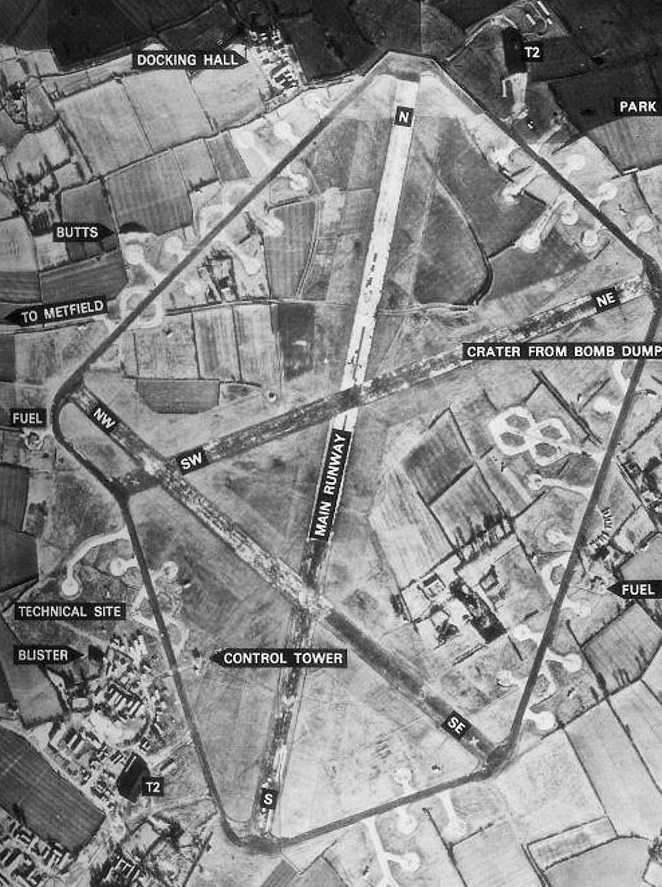
RAF Metfield (USAAF Station 366), located southeast of the village of Metfield in Suffolk, England, was a heavy bomber airfield in Suffolk, England, that served as the first combat home of the 491st Bombardment Group (Heavy) during World War II. Although the 491st remained there for only about three months—from late April until mid-August 1944—it played an important role in the group's early combat history before the unit moved to RAF North Pickenham.
Squadrons
- 852nd Aircrft Body Code 3Q
- 853rd Aircrft Body Code T8
- 854th Aircrft Body Code 6X
- 855th Aircrft Body Code V2
Construction and Features
- RAF Built: 1943
- Design: Standard Class-A bomber airfield
- Runways: Three intersecting concrete runways
- Personnel Capacity: Accommodated approximately 2,900 personnel
- Facilities: Included two T-2 type hangars and fifty dispersal points
Wartime history
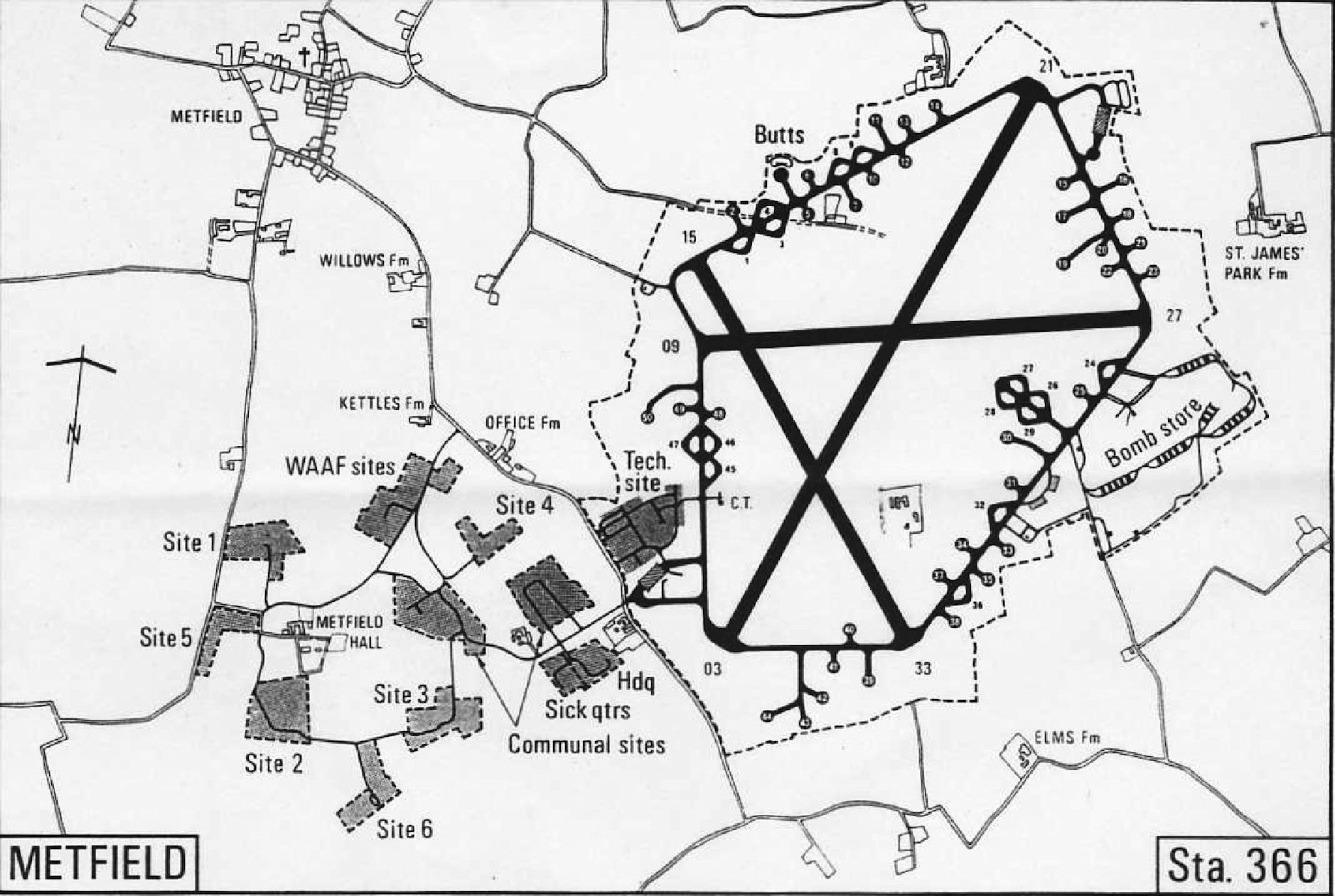
The airfield was constructed as a standard Class A bomber station with three concrete runways, numerous aircraft dispersal areas, and accommodation for nearly 3,000 personnel. It initially hosted the 353rd Fighter Group, flying Republic P-47 Thunderbolts on bomber escort and fighter missions, before becoming home to the 491st Bombardment Group, which operated Consolidated B-24 Liberators against strategic targets across occupied Europe and Germany.
The Metfield bomb dump explosion
One of the most dramatic accidents to occur at any Eighth Air Force base happened at Metfield.
On 15 July 1944, while bombs were being unloaded, a mishandled bomb detonated, setting off approximately 1,200 tons of bombs stored in the bomb dump.
The explosion:
- Killed six American servicemen.
- Destroyed five B-24 Liberators.
- Severely damaged six more.
- Created a massive crater visible for many years after the war.
- Shook buildings for miles across Suffolk.
It remains one of the largest accidental explosions ever to occur at an American airbase in Britain.
Move to North Pickenham
On 15 August 1944, the Eighth Air Force reorganized the 95th Combat Wing. The 491st Bomb Group transferred to RAF North Pickenham, where it remained for the rest of the war.
From there the group completed its combat tour, flying missions until 25 April 1945. During the war it flew:
- 187 combat missions/li>
- 5,005 combat sorties/li>
- Lost 47 B-24 Liberators in combat/li>
The group earned a Distinguished Unit Citation for its attack on the Misburg oil refinery.
RAF Metfield today
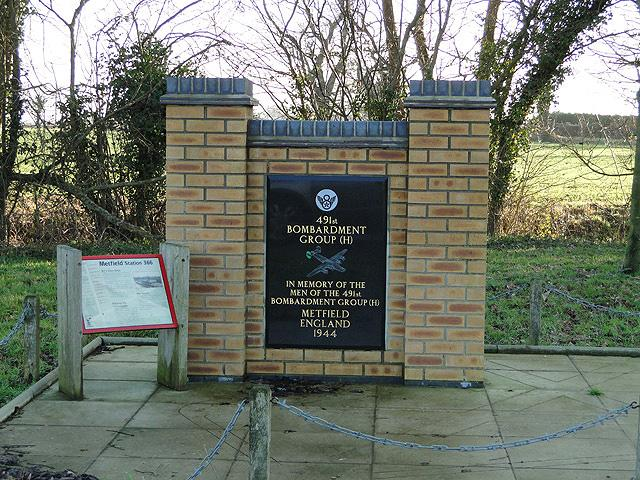
Much of the former airfield has been returned to farmland, and most runways and taxiways were removed during the 1960s. A few surviving concrete sections, scattered wartime buildings, and the roadside memorial near the former entrance preserve the site's history. The public memorial includes plaques honoring the 353rd Fighter Group, the 491st Bombardment Group, the bomb dump explosion, and interpretive displays showing the wartime layout of the airfield. The site remains one of the quieter and less-developed former Eighth Air Force bomber stations, preserving much of its wartime landscape.
Visitors today can still find:
- Portions of ruenway and taxiways
- Sections of concrete perimeter track/li>
- Foundations of wartime buildings/li>
- A few surviving structures/li>
- The 491st Bomb Group Memorial, dedicated to the airmen who served there/li>
Aircrew Memorial