RAF OLD BUCKENHAM AIR BASE
HOME OF THE 453rd BOMB GROUP
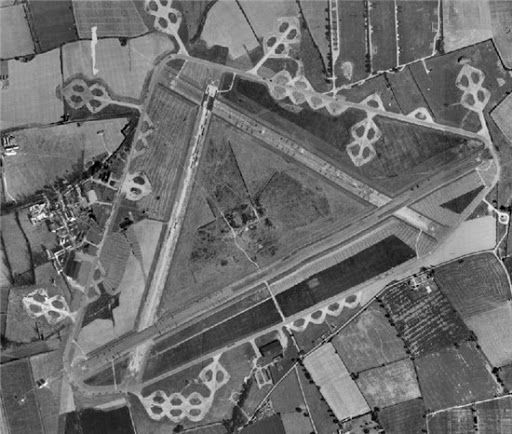
RAF Old Buckenham, located in Norfolk, England, was one of the last heavy bomber airfields constructed for the United States Army Air Forces during World War II. Designated USAAF Station 144, it became the permanent wartime home of the 453rd Bombardment Group (Heavy), equipped with Consolidated B-24 Liberators. From this base, the group flew strategic daylight bombing missions against Germany and occupied Europe from February 1944 until April 1945.
Construction of RAF Old Buckenham
Construction of RAF Old Buckenham began during 1942 as part of Britain's massive wartime airfield expansion program. The site was selected because of its relatively level terrain, excellent drainage, and proximity to other Eighth Air Force bomber stations in Norfolk. Originally farmland, hundreds of acres were acquired to build what would become one of the finest heavy bomber stations in East Anglia.
Built to the standard Class A heavy bomber airfield design, the station featured:
- A 6,000-foot (2,000-yard) primary concrete runway.
- Two intersecting secondary runways measuring approximately 4,200 feet each.
- A complete perimeter taxiway connecting all operational areas.
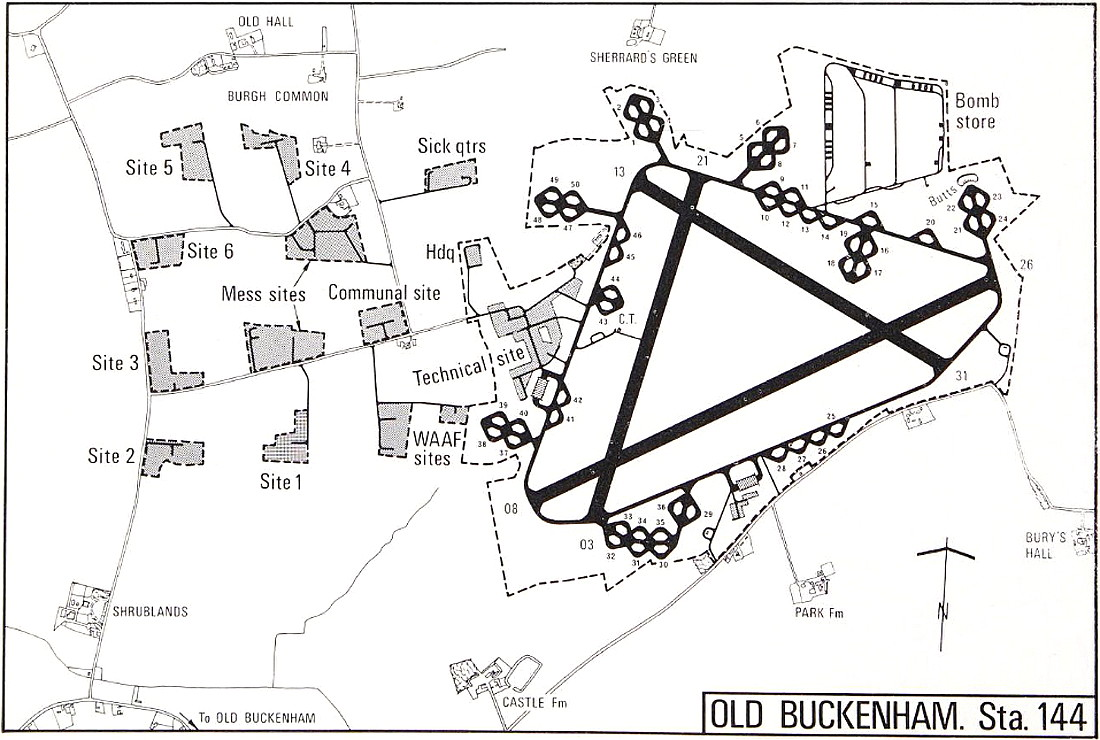
- Fifty hardstand dispersal pans where B-24 Liberators could be parked, serviced, and armed.
- Two large T-2 steel hangars for major maintenance and repair work.
- Bomb storage areas connected to the airfield by specialized bomb-loading roads.
- Fuel storage installations capable of supplying thousands of gallons of aviation gasoline daily.
- Technical buildings, workshops, engineering facilities, and operations headquarters.
- Living accommodations for nearly 3,000 officers and enlisted personnel.
Like most Second Air Division stations, much of the construction was carried out by British civilian contractors working alongside Royal Engineers. The project required thousands of tons of concrete, steel, crushed stone, and timber. Construction continued through difficult winter weather, with crews working around the clock so the airfield would be ready for American forces arriving in late 1943.
Airfield Layout and Design
Old Buckenham was designed specifically for the operation of four-engine heavy bombers.
The three-runway layout allowed aircraft to take off and land safely regardless of changing wind conditions. Taxiways encircled the landing area, permitting bombers to move efficiently between dispersal hardstands and the active runway.
Aircraft dispersals were widely separated around the perimeter to reduce damage in case of enemy air attack. Each hardstand included servicing points, electrical connections, and room for maintenance equipment.
The technical site contained:
- Group Headquarters
- Operations Building
- Intelligence Section
- Weather Office
- Communications Center
- Engineering Shops
- Armament Shops
- Instrument Repair Shops
- Motor Transport Pool
- Fire Station
- Medical Dispensary
Nearby bomb dumps were carefully isolated within wooded areas protected by earth revetments. Bombs arrived by rail and truck before being assembled and transported to waiting aircraft.
Arrival of the 453rd Bomb Group
The 453rd Bombardment Group arrived at RAF Old Buckenham between December 1943 and January 1944 after completing stateside training.
Ground personnel crossed the Atlantic aboard the RMS Queen Elizabeth, while flight crews ferried their new B-24 Liberators via the Southern Ferry Route through Florida, South America, Ascension Island, North Africa, and finally England.
The group consisted of four bomb squadrons:
- 732nd Bomb Squadron
- 733rd Bomb Squadron
- 734th Bomb Squadron
- 735th Bomb Squadron
Each aircraft carried the distinctive Circle "J" tail marking, making the group easily recognizable throughout the Eighth Air Force.
Upon arrival, aircrews immediately began familiarization flights, navigation training, formation flying, bombing practice, and gunnery exercises before entering combat in February 1944.
Daily Operations at the Airbase
RAF Old Buckenham became a busy military community operating twenty-four hours a day.
Mission preparation often began long before dawn. Aircrews attended weather briefings and intelligence sessions while maintenance personnel completed final inspections of every aircraft.
Bomb-loading crews spent hours carefully installing thousands of pounds of bombs into each B-24's bomb bay. Armorers loaded machine gun ammunition while fuel trucks topped off each bomber with aviation gasoline.
Before every mission, hundreds of specialists performed final inspections involving:
- Engines
- Propellers
- Hydraulic systems
- Electrical wiring
- Oxygen equipment
- Radio systems
- Flight controls
- Bomb release mechanisms
When the green flare signaled takeoff, Liberators taxied in long lines around the perimeter track before departing at carefully timed intervals.
Following each mission, aircraft underwent complete inspections to repair flak damage, replace engines, patch bullet holes, and prepare for the next operation.
Living Conditions
The station functioned as a self-contained American town.
Personnel lived primarily in Nissen huts located in dispersed accommodation sites surrounding the airfield.
Facilities included:
- Dining halls
- Chapels
- Recreation halls
- Library
- Post Exchange
- Barber shop
- Laundry
- Gymnasium
- Athletic fields
- Outdoor theaters
Despite the hardships of combat, baseball games, dances, movies, concerts, and USO shows provided welcome relief from operational stress.
Many American airmen developed lifelong friendships with residents of Old Buckenham, Attleborough, and neighboring Norfolk villages.
Airfield Defenses
Although located well inland from the English coast, Old Buckenham maintained extensive security.
These included:
- Perimeter fencing
- Guard towers
- Armed military police patrols
- Camouflage around key installations
- Air raid shelters
- Fire-fighting equipment
- Emergency crash crews
- Blackout regulations throughout the station
Nearby anti-aircraft batteries and RAF fighter defenses helped protect the airfield from occasional Luftwaffe attacks.
Engineering and Maintenance
One of the most impressive achievements at Old Buckenham was the work performed by maintenance personnel.
Hundreds of mechanics worked continuously to keep the group's Liberators combat ready.
Typical maintenance included:
- Complete engine replacements
- Propeller balancing
- Hydraulic repairs
- Landing gear servicing
- Oxygen system maintenance
- Electrical troubleshooting
- Sheet metal repairs
- Battle damage restoration
- Bomb rack maintenance
- Radio calibration
Many aircraft returned with severe battle damage, yet skilled crews often repaired them within only a few days.
Communications and Mission Control
The control tower served as the nerve center of flight operations.
Controllers coordinated takeoffs and landings while maintaining communication with surrounding Eighth Air Force stations.
Operations personnel tracked mission departures, weather changes, emergency landings, and returning aircraft.
Large plotting boards inside the Operations Room displayed bomber formations, mission status, and aircraft losses throughout the day.
Jimmy Stewart at Old Buckenham
One of the station's most famous officers was Hollywood actor James Stewart, who served with the 453rd Bomb Group beginning in 1944.
Initially assigned as Operations Officer, Stewart later became Executive Officer and eventually commanded the group.
Unlike many celebrity servicemen, Stewart insisted upon flying combat missions. He participated in numerous operational sorties over occupied Europe, earning the respect of both officers and enlisted personnel.
His leadership and professionalism made him one of the most admired officers at RAF Old Buckenham.
End of the War
The 453rd Bomb Group flew its final combat mission on 12 April 1945.
Following Germany's surrender, personnel prepared for possible transfer to the Pacific Theater, although Japan surrendered before redeployment became necessary.
During the summer and autumn of 1945, aircraft departed England while personnel gradually returned to the United States.
The Americans officially relinquished RAF Old Buckenham, ending nearly two years of intensive wartime operations.
Postwar History
Following the departure of the USAAF, RAF Old Buckenham briefly returned to Royal Air Force control before military flying gradually ceased.
During the postwar years, portions of the runways and taxiways were removed or converted to agricultural use. Some wartime buildings were demolished, while others found new uses as farm buildings, workshops, or industrial facilities. Despite these changes, significant portions of the original airfield survived, preserving the wartime layout that once launched hundreds of B-24 Liberators toward occupied Europe.
In later decades, local aviation enthusiasts helped revive the airfield as a civilian airport. Today, Old Buckenham remains one of the few former Eighth Air Force bomber stations still operating as an active airfield. General aviation aircraft regularly use the historic runway, allowing visitors to experience a site that has remained connected to aviation for more than eighty years.
Preservation and Legacy
RAF Old Buckenham remains one of the best-preserved heavy bomber stations of the Second Air Division.
Visitors can still see:
- Sections of the original wartime runway.
- The perimeter track and numerous dispersal hardstands.
- Original taxiways.
- Wartime buildings and engineering areas.
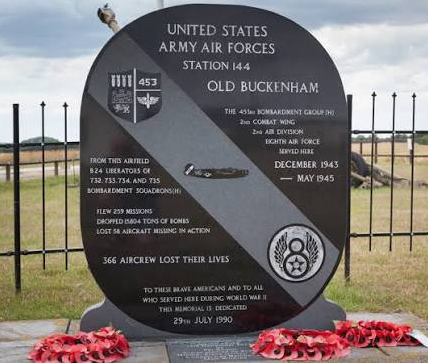
- Memorials honoring the 453rd Bomb Group.
- The restored 453rd Bombardment Group Museum, containing artifacts, uniforms, mission records, photographs, aircraft parts, and personal stories of the men who served there.
- Annual memorial services and commemorative flying events that continue the tradition of honoring the airmen who departed from Old Buckenham during World War II.
Today, RAF Old Buckenham stands not only as the wartime home of the 453rd Bombardment Group but also as one of the finest preserved examples of a U.S. Eighth Air Force heavy bomber base. Its surviving runways, memorials, and museum ensure that future generations will understand the enormous effort required to wage the strategic air campaign over Europe and remember the thousands of American and British personnel who served at USAAF Station 144.
Base Sign