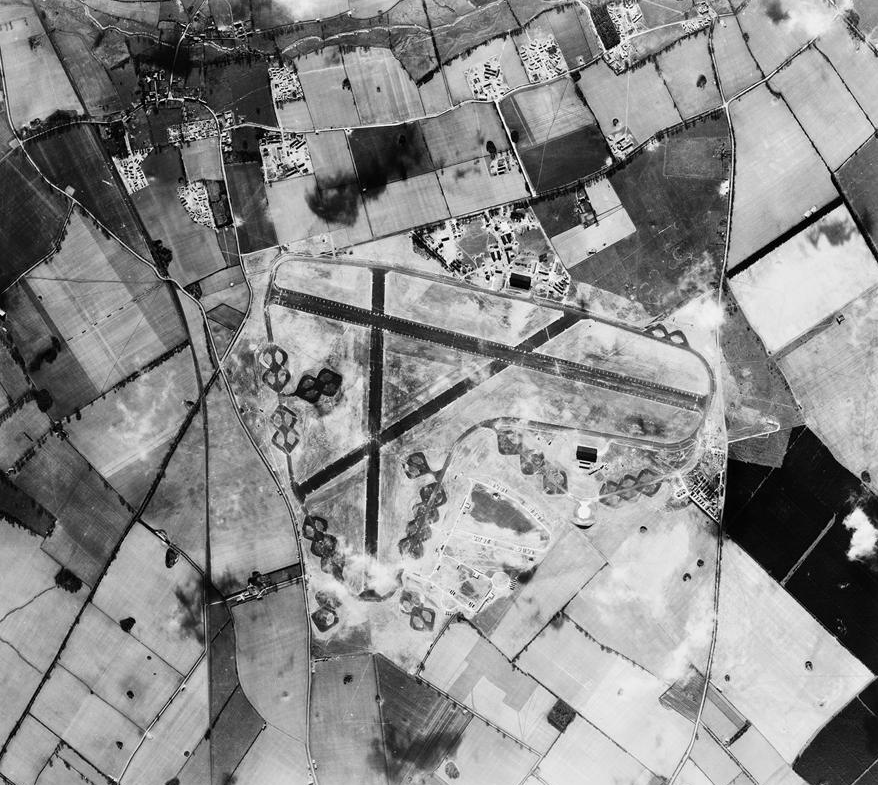
NORTH PICKENHAM ENGLAND AIR BASE
HOME OF THE 492ND & 491ST BOMB GROUPS
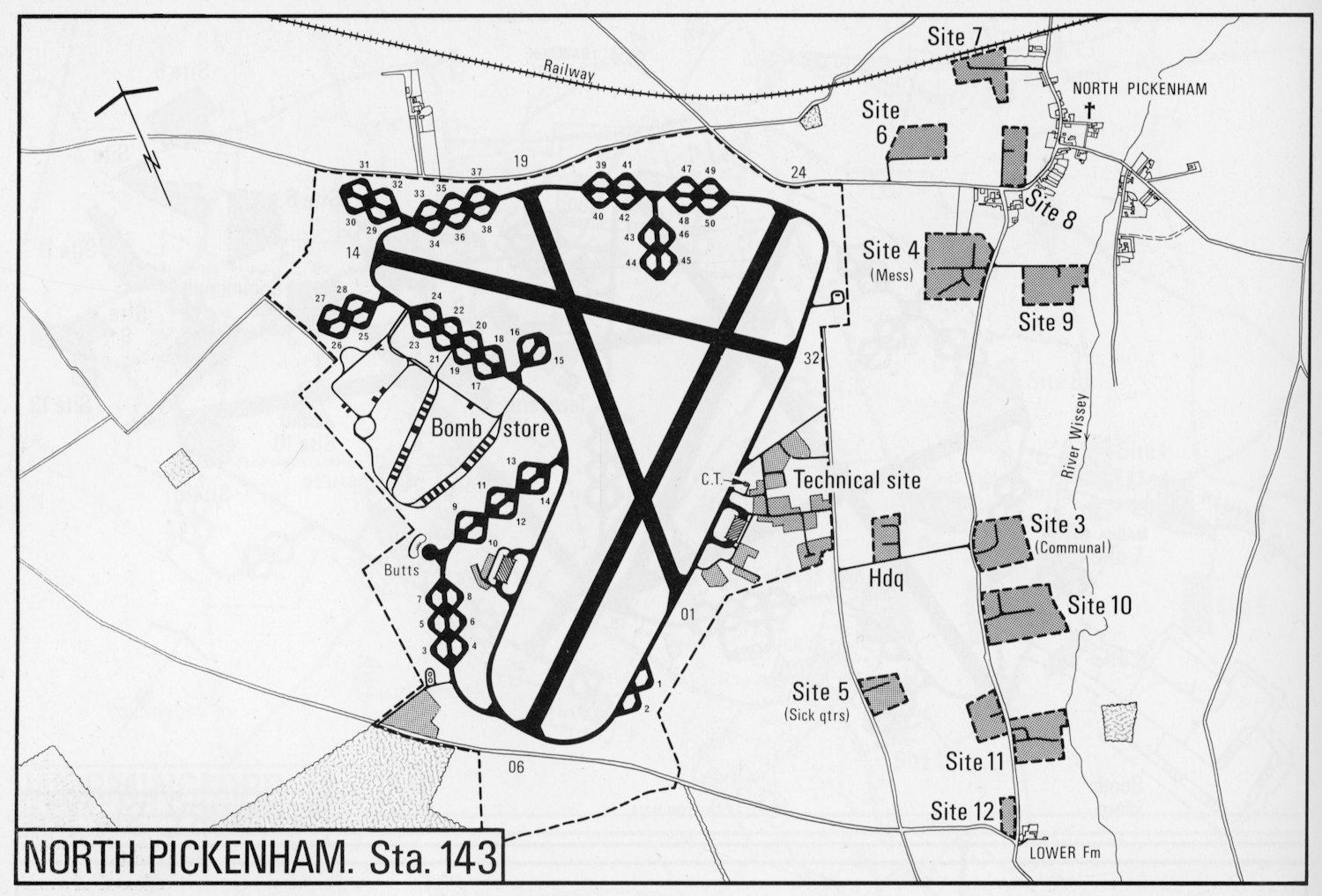
RAF North Pickenham was built during 1942–1943 as a standard American "Class A" heavy bomber station in Norfolk, England. It was designed specifically for the large four-engine bombers of the United States Army Air Forces. It first housed the 492nd Bombardment Group flying B-24 Liberators, then the 491st Bombardment Group from August 1944. The station received the USAAF designation Station 143, identified by the code NP.
The airfield featured:
- Three concrete runways
- Main runway: 5,610 feet (1,710 m)
- Two secondary runways approximately 4,000 feet long
- A 50-aircraft perimeter taxi track
- Approximately 50 hardstands ("frying pans") for dispersing bombers
- Two large T-2 hangars
- Bomb dumps
- Fuel storage
- Control tower
- Operations building
- Barracks and support facilities for approximately 3,000 personnel
Significance
Although RAF North Pickenham was active as a USAAF bomber station for only about 16 months, it occupies a unique place in the history of the Second Air Division. It was the base of one of the most hard-hit B-24 groups in the European air war, and the sacrifice of the 492nd Bombardment Group remains one of the most poignant stories of the Eighth Air Force's strategic bombing campaign.
Arrival of the 492nd Bomb Group
The 492nd Bombardment Group arrived from Alamogordo Army Air Field, New Mexico, on 18 April 1944.
Its four flying squadrons were:
- 856th Bomb Squadron (5Z)
- 857th Bomb Squadron (9H)
- 858th Bomb Squadron (9A)
- 859th Bomb Squadron (X4)
The group's aircraft carried the distinctive Circle-U wing marking, making them easily recognizable throughout the Eighth Air Force.
Departure
Because of these devastating losses, the 492nd was withdrawn from conventional daylight bombing operations on 7th August 1944.
Its surviving aircraft and personnel were redistributed among other B-24 groups, while the group's designation moved to RAF Harrington for special operations in support of the Office of Strategic Services, where modified B-24s flew clandestine supply missions to resistance forces behind enemy lines.
The 491st Bomb Group
After the 492nd departed, the airfield became home to the 491st Bombardment Group, which remained at North Pickenham until the end of the war. The 491st continued flying strategic bombing missions over Germany and earned a Distinguished Unit Citation for its actions during a mission against the Misburg oil refinery in November 1944.
Postwar History
Following World War II, RAF North Pickenham experienced several different uses:
- USAAF & RAF storage and maintenance base
- Home of No. 220 Squadron equipped with Thor intermediate-range nuclear missiles (1959–1963)
- Test site for the experimental Hawker P.1127, the aircraft that evolved into the Harrier jump jet
- Closed permanently in 1967
What Remains Today
Much of the original airfield has disappeared under agricultural development, including a large turkey farm, but several important remnants survive:
- Portions of the perimeter track and runways
- Some wartime buildings
- The former headquarters block
- Bomb storage areas
- Memorials honoring both the 492nd and 491st Bomb Groups
- A memorial bench and commemorative plaque dedicated during a Second Air Division reunion in 1987
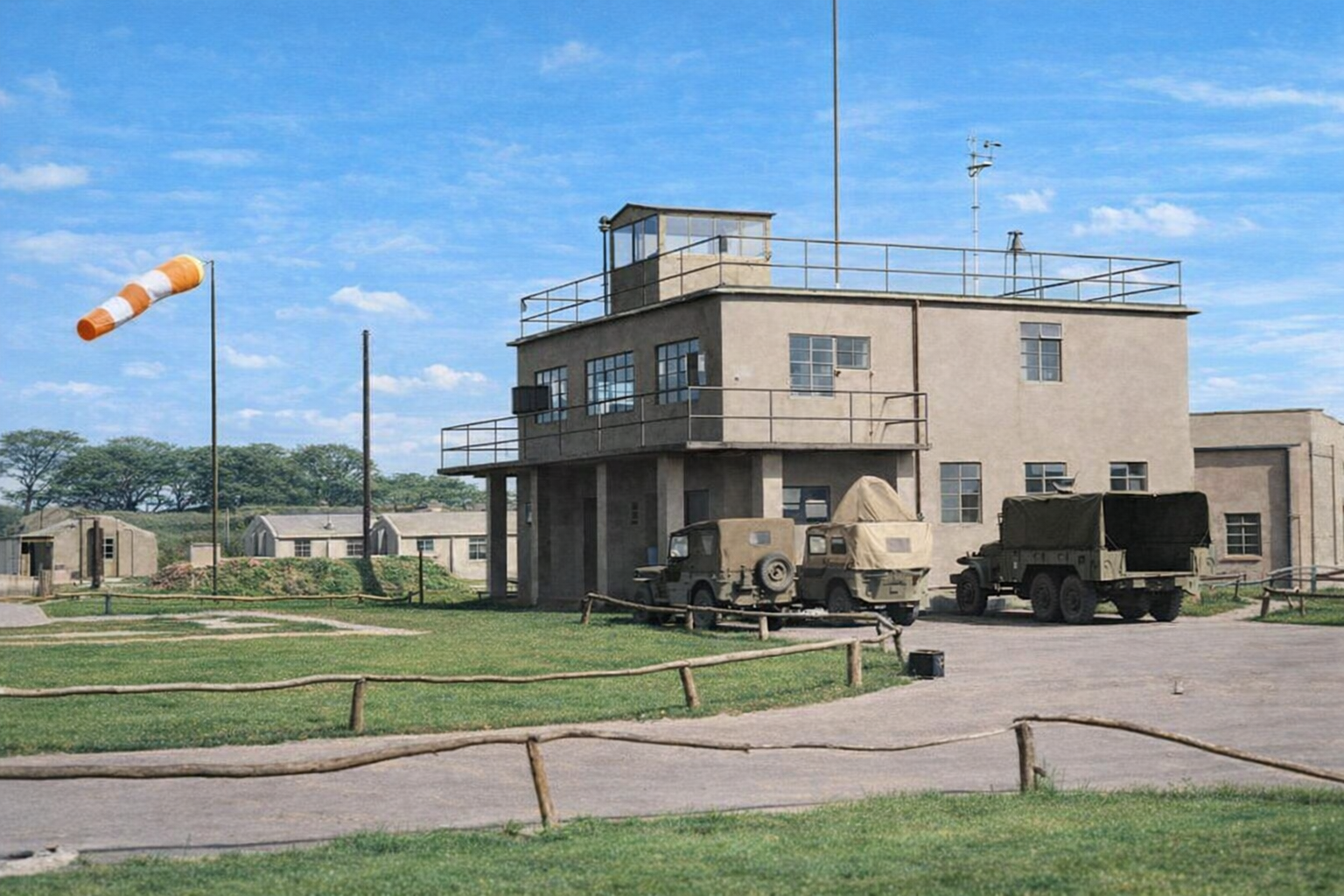
Pickenham Control Tower
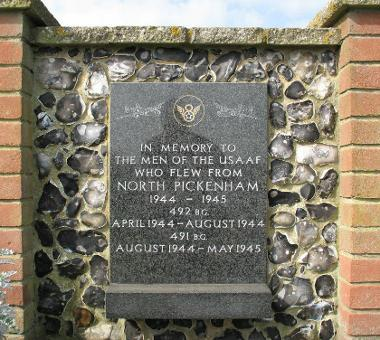
Aircrew Memorial