SEETHING AIR BASE
HOME OF THE 448th BOMB GROUP
RAF Seething, located approximately 10 miles (16 km) southeast of Norwich in Norfolk, England, was one of the heavy bomber airfields constructed during the rapid expansion of Britain's military airfield network in the Second World War. Built specifically to support the United States Army Air Forces' strategic bombing offensive against Nazi Germany, the station became one of the principal B-24 Liberator bases of the Eighth Air Force's Second Air Division. Throughout the war it was officially designated USAAF Station 146.
Construction of RAF Seething
Construction of RAF Seething began during 1942 under the supervision of the British construction firm John Laing & Son Ltd. Hundreds of acres of Norfolk farmland were requisitioned as part of Britain's wartime airfield building program. Fields, hedgerows, drainage ditches, and country lanes were transformed into a modern military air station capable of supporting large four-engine heavy bombers operating around the clock.
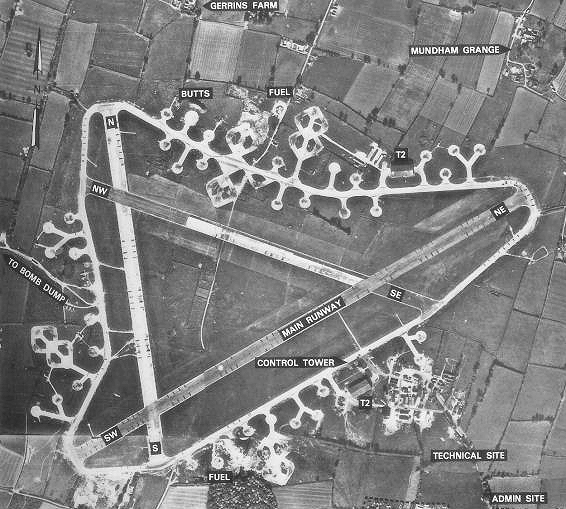
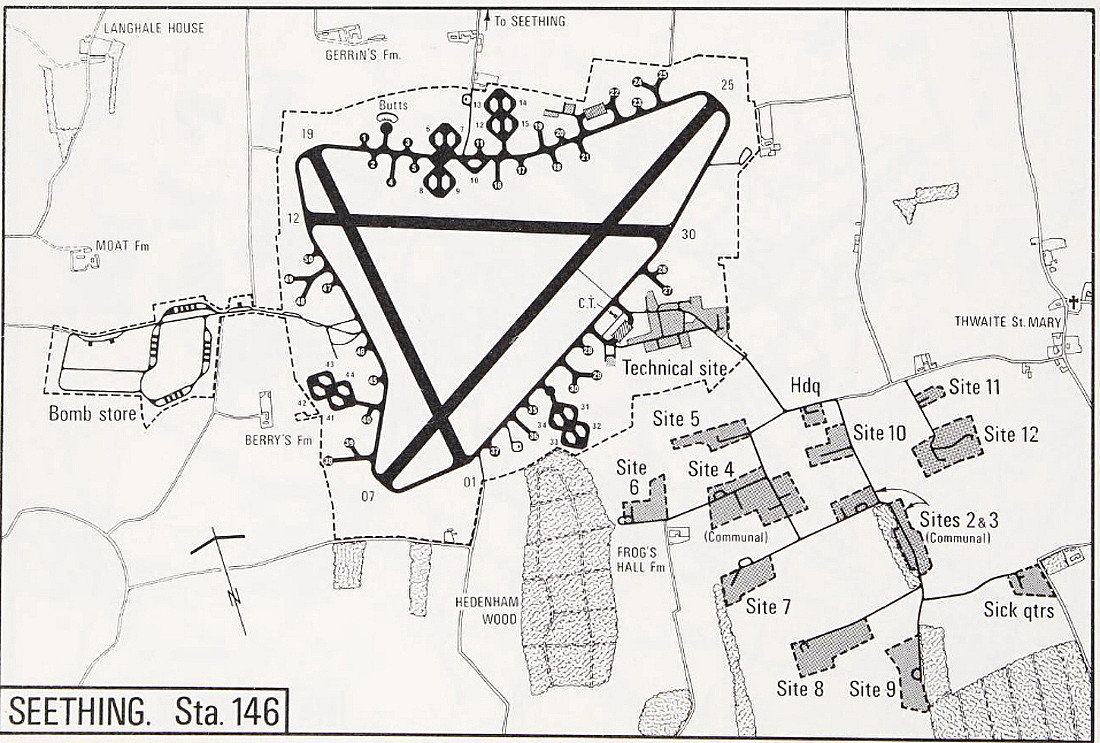
The airfield was constructed as a standard Class A heavy bomber station, the design adopted throughout East Anglia for American heavy bomber operations. The completed station included:
- A 6,000-foot (1,829 m) concrete main runway.
- Two intersecting secondary runways approximately 4,200 feet (1,280 m) long.
- A three-mile perimeter taxiway.
- 51 aircraft dispersal hardstands positioned around the perimeter track.
- Two T-2 steel maintenance hangars.
- Technical and engineering sites.
- Bomb storage compounds located away from operational areas.
- Fuel storage installations.
- Administrative buildings.
- Several dispersed domestic sites containing barracks, mess halls, recreation buildings, hospitals, and support facilities.
The widely dispersed layout was designed to reduce the effects of enemy air attack and to keep aircraft, fuel, ammunition, and personnel separated for greater safety and operational efficiency.
Transfer to the United States Army Air Forces
Although built as a Royal Air Force station, RAF Seething was transferred to the United States Army Air Forces before becoming operational. It officially opened on 1 December 1943 and was assigned to the Second Air Division of the Eighth Air Force as USAAF Station 146.
The station became the permanent wartime home of the 448th Bombardment Group (Heavy), whose B-24 Liberators operated from Seething until the end of the war. The group's arrival transformed the quiet Norfolk airfield into a busy American military installation operating continuously in support of the Allied air offensive.
Airfield Facilities
RAF Seething functioned as a completely self-contained military community capable of supporting thousands of personnel and dozens of heavy bombers. At its wartime peak, the station accommodated nearly 3,000 officers and enlisted personnel.
The technical site contained maintenance workshops, engineering buildings, operations headquarters, communications facilities, weather offices, supply warehouses, and motor transport sections. Bombs and aviation fuel were stored in separate secured compounds connected to the flying field by an extensive internal road system.
The domestic camps included:
- Officer and enlisted barracks
- Dining halls
- Administration buildings
- Medical facilities
- Fire station
- Chapel
- Recreation halls
- Post Exchange (PX)
- Water and electrical services
- Heating and sanitation systems
Roads connected the various camps with the flying field, allowing personnel and equipment to move efficiently throughout the station.
Airfield Operations
RAF Seething operated continuously throughout the war. Before each mission, aircraft were towed or taxied from their dispersal hardstands to the perimeter track before moving onto the active runway for takeoff.
Ground crews worked around the clock preparing aircraft for flight by:
- Refueling bombers.
- Loading bombs and ammunition.
- Servicing engines.
- Repairing battle damage.
- Inspecting hydraulic and electrical systems.
- Maintaining radios and navigation equipment.
- Testing oxygen systems.
- Preparing emergency equipment.
After returning from operations, aircraft were inspected immediately. Many required extensive repairs after suffering damage from anti-aircraft fire or enemy fighters. Maintenance crews frequently worked through the night to prepare the bombers for their next mission.
Importance of the Airfield
RAF Seething was strategically located within East Anglia, providing direct access to the North Sea and the air routes leading into occupied Europe and Germany. Its location allowed heavy bombers to assemble into formation before crossing the English coastline while remaining close to major maintenance, supply, and transportation facilities supporting the Eighth Air Force.
The station represented one of dozens of interconnected American bomber bases spread throughout Norfolk and Suffolk. Together these airfields formed one of the largest concentrations of military aviation ever assembled, launching hundreds of heavy bombers daily against strategic targets across Europe.
Wartime Development
As operational demands increased during 1944, improvements continued throughout RAF Seething. Additional hardstandings, maintenance areas, communications equipment, and support buildings were added to improve efficiency. Roads were strengthened to carry heavy bomb loads, drainage systems were improved, and workshops expanded to handle the increasing number of aircraft requiring maintenance.
The airfield became a highly organized base capable of sustaining continuous combat operations despite difficult weather conditions, heavy aircraft usage, and the constant need for repairs and logistical support.
End of Military Operations
Following Germany's surrender in May 1945, flying operations gradually ceased. The American personnel departed during the summer, and RAF Seething was returned to Royal Air Force control.
The station was briefly occupied by No. 53 Maintenance Unit and later No. 94 Maintenance Unit, which used the airfield for equipment storage, maintenance, and disposal of wartime surplus. As military requirements diminished, RAF Seething was declared surplus and officially closed before the end of 1945.
RAF Seething Today
Following its closure, much of RAF Seething returned to agricultural use, although many original wartime features survive. Portions of the main runway, perimeter track, taxiways, aircraft dispersals, and service roads remain visible, making Seething one of the better-preserved former Eighth Air Force airfields.
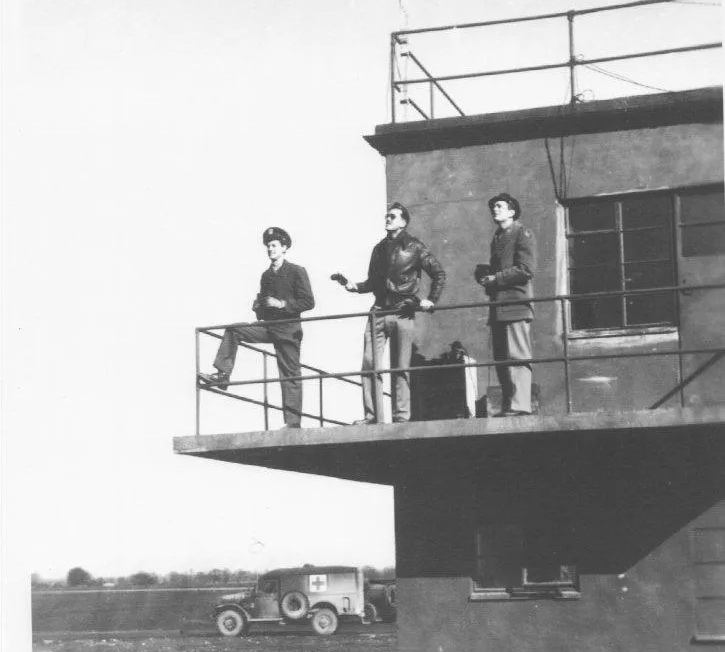
Today, part of the former station operates as Seething Airfield, a private general aviation airfield. The restored wartime control tower serves as the 448th Bomb Group Memorial Museum, preserving the history of the airbase through photographs, documents, artifacts, and exhibits. Together with surviving runways and other original structures, the site remains an important reminder of the extensive network of American heavy bomber airfields that operated from Norfolk during the Second World War and the vital role RAF Seething played in the Allied air campaign.
Seething Control Tower Museum
Seething Control Tower Museum features exhibits related to: social history, aviation and weapons and war. Situated in the restored control tower of Station 146 USAAF, the building also serves as a memorial to the 3,000 American service personnel who served in this corner of Norfolk during WW2 and to those who gave their lives far from home. We try to show some of the daily life on the base and the impact it had on the local people during the relatively short time the 8th Air Force was here. The Waveney Flying Group use the airfield so we still have active flying.
Seething Tower