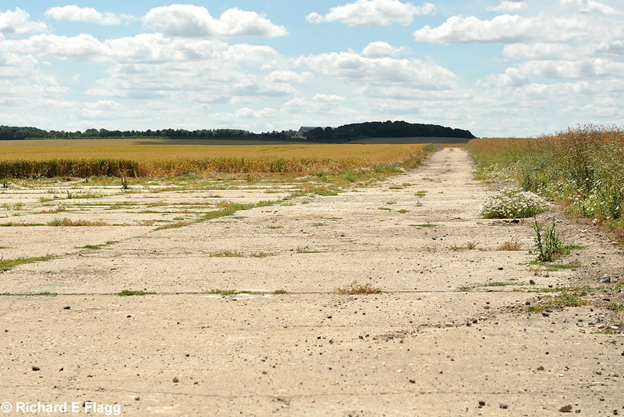
RAF STEEPLE MORDEN AIR BASE
HOME OF THE 355th FIGHTER GROUP of WWII
RAF Steeple Morden was one of the premier fighter bases of the Eighth Air Force. Unlike the large B-17 and B-24 stations of the 1st and 2nd Air Divisions, Station 122 was home to long-range escort fighters that accompanied bomber formations deep into occupied Europe and Germany. The airfield played a crucial role in gaining and maintaining Allied air superiority during the final two years of the war.
History RAF Period (1940-1942)
Steeple Morden opened in September 1940 as a grass satellite airfield for RAF Bassingbourn. It was initially occupied by RAF Operational Training Units flying Vickers Wellingtons and served primarily as a dispersal and training field. Following the decision to expand the American air effort in Britain, the Air Ministry selected Steeple Morden for conversion into a permanent Class A airfield.
Conversion for the USAAF
During late 1942 and early 1943 the station underwent a complete reconstruction. When completed, the station was transferred to the United States Army Air Forces as Station 122. Major improvements included:
- Three concrete runways
- Full perimeter taxiway
- Concrete dispersal hardstands
- New technical site
- T-2 maintenance hangar
- Control tower (Watch Office)
- Expanded domestic camps
- Bomb and ammunition storage
- Fuel storage facilities
Early American Occupants
Before becoming a fighter station, the airfield briefly housed the 3rd Photographic Reconnaissance Group, whose F-4 (photo-reconnaissance P-38) aircraft deployed from Steeple Morden before moving to North Africa in support of Operation Torch.
The 355th Fighter Group
The 355th Fighter Group arrived on 6 July 1943. Its squadrons were:
- 354th Fighter Squadron
- 357th Fighter Squadron
- 358th Fighter Squadron
The group initially flew the Republic P-47 Thunderbolt before converting in 1944 to the North American P-51 Mustang, dramatically increasing escort range.
Physical Configuration During 1944
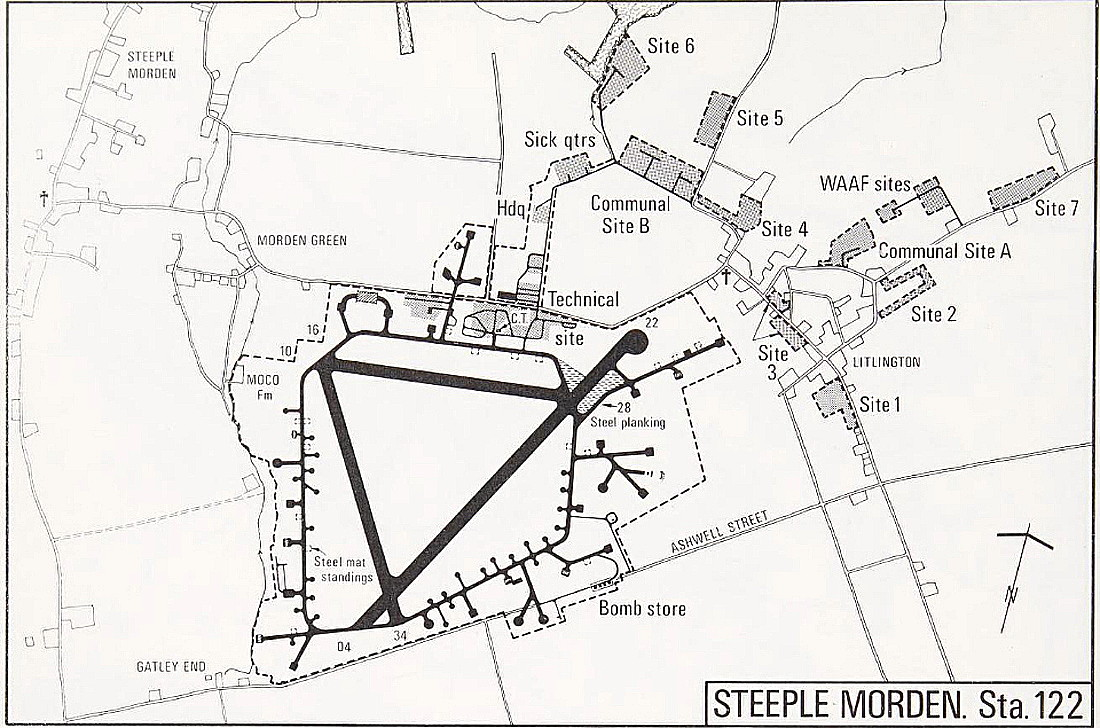
By mid-1944 Steeple Morden had all the features of a standard USAAF fighter station. Runways. The airfield had three intersecting concrete runways. These shorter runways were well suited to single-engine fighters rather than heavily loaded bombers:
- 04/22 - approximately 4,800 ft × 150 ft
- 16/34 - approximately 3,300 ft × 150 ft
- 10/28 - approximately 3,225 ft × 150 ft
Perimeter Track
A continuous concrete perimeter taxiway connected. This allowed fighters to taxi directly from dispersal to the active runway:
- All runways
- Technical area
- Hangar
- Aircraft dispersals
Aircraft Dispersals
Around the perimeter were numerous loop and frying-pan hardstands. Unlike heavy bomber stations, fighter dispersals required much less space. Unlike heavy bomber stations, fighter dispersals required much less space. These dispersals:
- Reduced vulnerability to enemy attack
- Allowed squadron parking by flight
- Included revetments of earth banks and vegetation
The station included:
- One permanent T-2 hangar
- Additional maintenance buildings
- Engine repair shops
- Armament workshops
Technical Sites
The technical and operational center area included:
- Operations building
- Intelligence room
- Briefing room
- Engineering section
- Radio maintenance
- Armament shops
- Fire station
- Control tower (Watch Office)
Domestic Sites
Personnel lived in dispersed camps. These camps were separated from the flying field to reduce congestion and improve protection. Fuel and Ammunition:
- Nissen huts
- Officers' quarters
- Enlisted barracks
- Mess halls
- Recreation facilities
- Chapel
- Hospital
- Headquarters
- Motor transport area
Separate storage areas were established for the risk of catastrophic explosions:
- High-octane aviation gasoline
- Machine-gun ammunition
- .50-caliber belts
- Rockets (late war)
- Bombs for fighter-bomber operations
Return to the Royal Air Force
Following the withdrawal of the U.S. Army Air Forces, RAF Steeple Morden officially returned to RAF Fighter Command on 1 November 1945. By this stage, however, Britain's wartime need for numerous fighter stations had disappeared. The base saw little further operational activity and entered a caretaker status.
Closure of the Airfield
The Air Ministry officially closed RAF Steeple Morden on 1 September 1946. Military personnel departed, buildings were gradually vacated, and maintenance ceased. Over the next several years, the once-busy fighter station slowly deteriorated as temporary wartime structures were abandoned or dismantled.
Sale of the Property
During 1960–1961, the British government sold the former airfield to private owners. Most of the concrete runways and hardstands were broken up or covered, and the land was returned to its traditional agricultural use. Much of the station became productive farmland once again.
RAF Steeple Morden Today
Today, RAF Steeple Morden is one of the least recognizable former Eighth Air Force airfields. Although nearly all wartime buildings have disappeared:- Portions of the concrete perimeter track survive as farm roads.
- Several wartime structures, including parts of the operations area, remain on private property.
- The outlines of the runways can still be identified in aerial photographs and satellite imagery.
- Public footpaths cross portions of the former airfield, allowing visitors to appreciate its original size.
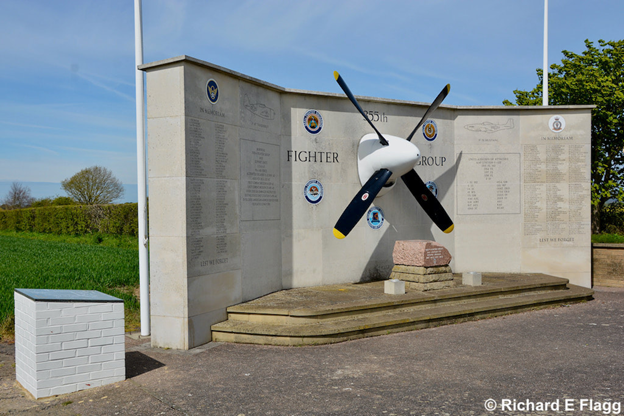
Steeple Morden Memorial