
Formation of the 392nd Bombardment Group
As the United States expanded its strategic air offensive against Nazi Germany, new heavy bombardment groups were organized, trained, and deployed to England to strengthen the rapidly growing Eighth Air Force. Equipped with the Consolidated B-24 Liberator, these organizations were tasked with carrying the war deep into enemy territory by attacking Germany’s aircraft industry, oil production, transportation system, military installations, and industrial capacity.
Among these organizations was the 392nd Bombardment Group (Heavy), whose aircrews and ground personnel would participate in one of the largest, longest, and most sustained aerial campaigns in military history. Throughout its combat service, the group distinguished itself through perseverance, formation discipline, bombing effectiveness, and a willingness to undertake some of the most difficult and dangerous missions assigned to the Eighth Air Force.
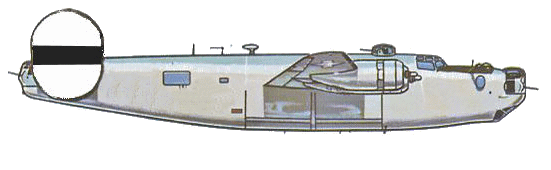
The 392nd Bombardment Group was activated on 26 January 1943 at Davis-Monthan Field, Arizona. Its original operational components were the:
After activation, the group moved through several Army Air Forces installations in the United States, including Biggs Field, Texas, and Alamogordo Army Air Base, New Mexico. During these months, its personnel completed an intensive program of combat preparation with the B-24 Liberator.
Pilots, copilots, navigators, bombardiers, engineers, radio operators, and aerial gunners trained in high-altitude formation flying, long-range navigation, precision bombing, aerial gunnery, emergency procedures, and coordinated combat operations. At the same time, mechanics, armorers, ordnance personnel, communications specialists, and other ground crews learned to maintain and service one of the Army Air Forces’ most complex heavy bombers.
Following completion of its training, the group began moving overseass during the summer of 1943. Aircrews ferried their B-24s across the Atlantic by stages, while much of the ground echelon traveled by troopship. The separate elements assembled in England during July and August 1943 and prepared to enter combat as part of the Second Bombardment Division, later redesignated the Second Air Division, of the Eighth Air Force.
RAF Wendling Before the Americans
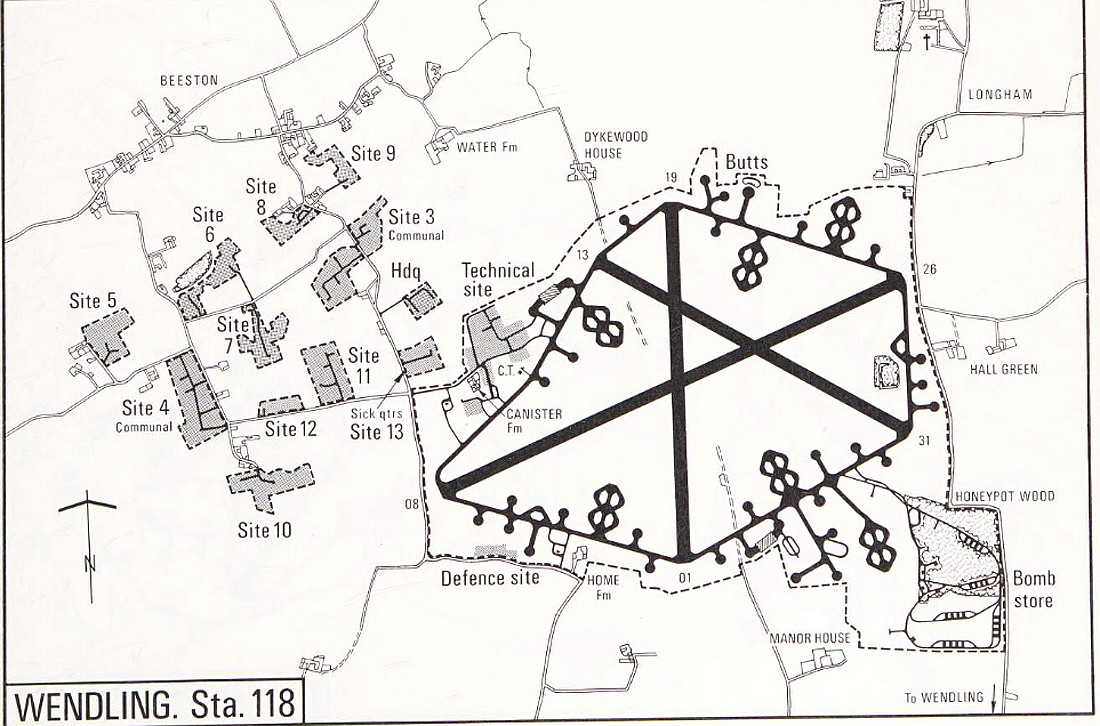
RAF Wendling was situated in the heart of rural Norfolk, approximately four miles northwest of East Dereham and near the villages of Wendling and Beeston. Before the war, the surrounding countryside consisted primarily of farms, woodlands, narrow country roads, and small villages whose populations numbered only a few hundred residents.
The airfield was originally planned during 1942 as part of Britain’s wartime airfield construction program. Although initially intended for Royal Air Force Bomber Command, it was allocated to the United States Army Air Forces as the American buildup in Britain accelerated. The airfield was constructed by the British civil engineering firm Taylor Woodrow and was designed to accommodate a heavy bombardment group and its large complement of aircraft, vehicles, equipment, and personnel.
RAF Wendling received the American designation USAAF Station 118. It held the geographical distinction of being the most northerly of the Eighth Air Force’s heavy bomber stations in England.
What the Airfield Looked Like
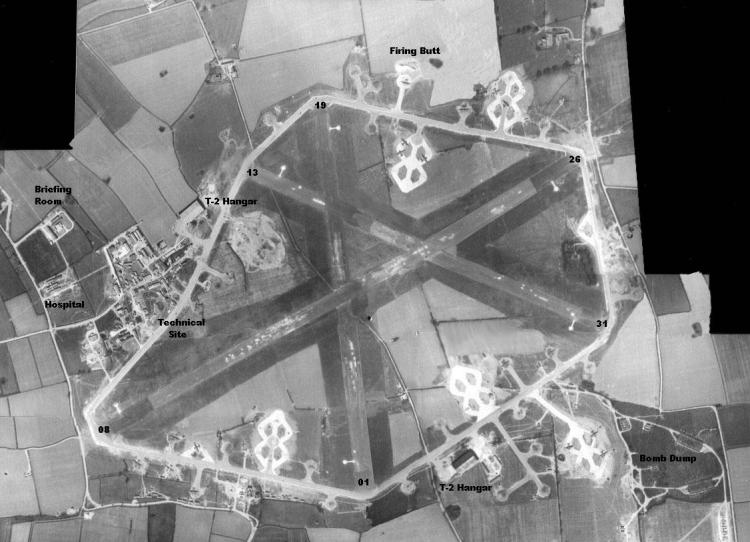
The Wendling base was optimized for high-stakes, rapid-deployment bomber operations:
Because fully fueled and armed heavy bombers were highly dangerous, the bomb storage dumps and fuel depots were intentionally placed as far away from the main living quarters and technical sites as possible, hidden in the surrounding countryside.
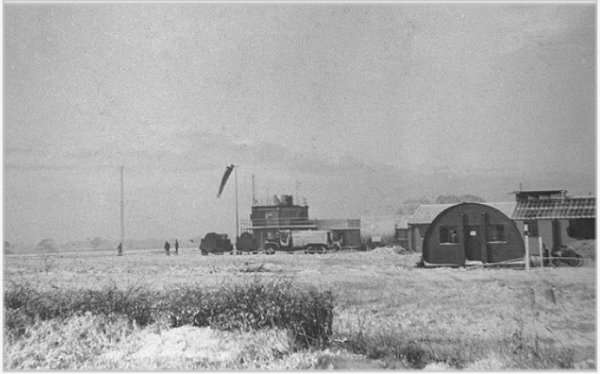
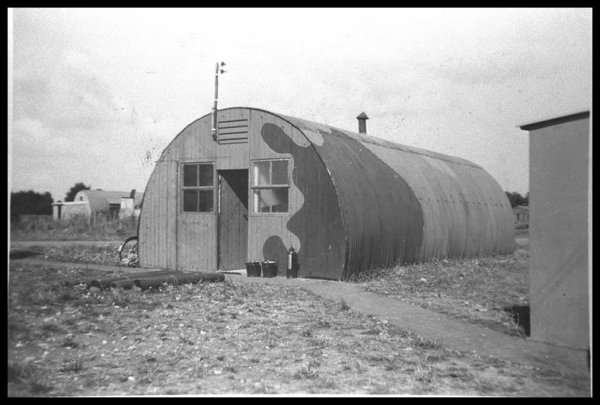
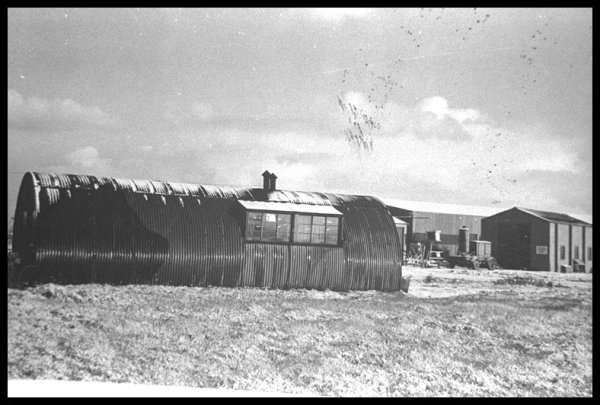
Nissen huts (prefabricated steel structures) and quarters were spread across the landscape. Because the base was highly rural, the favorite mode of transportation for local leave was the bicycle. Bumping around the narrow country lanes at night during wartime blackouts after visiting local pubs became a common, often humorous staple of base life.
To the south-east of the runway, situated on the edge of the station, among earth revetments designed to contain explosions a local woodland named Honeypot Wood was completely cleared and utilized as the highly secure, heavily guarded bomb dump. It was away from living quarters and aircraft parking areas.
Honeypot Wood Bomb Dump
One of the most important specialized areas at Wendling was the bomb storage complex near Honeypot Wood, southeast of the runway system. Much of the woodland was cleared during construction, and a network of concrete roads, storage areas, and protective revetments was established.
The bomb dump was positioned away from living quarters, aircraft parking areas, and the central technical site. Bombs and other explosives were stored in dispersed locations surrounded by earthworks intended to limit the effects of an accidental detonation.
Ordnance personnel worked in this heavily guarded area preparing bombs for missions, installing fuzes, checking components, and arranging the movement of weapons to the aircraft hardstands. Bombs were transported from the storage area to the waiting Liberators, where armorers loaded them into the aircraft’s bomb bays.
Arrival of the 392nd Bomb Group
The principal elements of the 392nd Bombardment Group began arriving at Wendling in early August 1943. The movement of personnel, aircraft, vehicles, and equipment transformed the newly completed station into a fully functioning American heavy bomber base.
The group adopted the nickname “Crusaders,” inspired by the imagery incorporated into its unit insignia. The name reflected the determination and sense of purpose with which its personnel approached the strategic air campaign and became a lasting part of the group’s identity.
The four bomb squadrons occupied their assigned areas around the station. Aircrews familiarized themselves with English weather, local navigation procedures, enemy defenses, Eighth Air Force formation tactics, and the operational requirements of flying from a crowded wartime airfield.
Ground crews worked to prepare newly arrived aircraft for combat. Guns were checked and test-fired, oxygen systems inspected, radio equipment calibrated, engines serviced, and bomb racks examined. Every Liberator required extensive preparation before it could be declared ready for an operational mission.
Life at USAAF Station 118
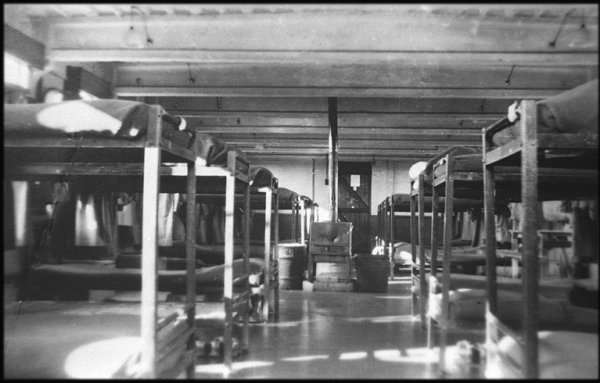
Most personnel lived in Nissen huts—semicircular buildings constructed from corrugated metal sheets. Although economical and quick to erect, the huts could be cold and damp during the winter and uncomfortable during warm weather.
Captain Laurence C. Gram, a 579th Bomb Squadron intelligence officer, described sharing a barracks with approximately 15 other men. Beds were separated by simple stands containing shelves and hooks. The quarters lacked running water, and water had to be obtained from a truck outside, carried in buckets to the washbasin, and collected again after use.
Coal-burning stoves provided limited heat, and mud was a persistent problem around the residential sites. Wartime blackout regulations required windows to be covered and outdoor lighting to be strictly controlled, making travel around the station and nearby country roads hazardous after dark.
Personnel were housed in dispersed residential sites rather than in one concentrated barracks area. This reduced vulnerability to air attack but required men to walk, cycle, or ride station vehicles between their quarters, dining halls, work areas, and aircraft dispersals.
The Strategic Bombing Campaign
From RAF Wendling, the 392nd participated in the Allied strategic bombing offensive against Germany and German-occupied Europe. Its B-24 Liberators attacked aircraft factories, oil refineries, railroad centers, submarine facilities, military airfields, steel works, chemical plants, bridges, canals, electrical installations, and other targets supporting the German war economy.
Among the group’s important objectives were oil facilities at Gelsenkirchen, marshalling yards at Osnabrück, the railroad viaduct at Bielefeld, industrial plants at Brunswick, the tank factory at Kassel, gas works in Berlin, and numerous other heavily defended targets.
Many missions required deep penetration into Germany. Crews sometimes spent eight or more hours in the air while confronting freezing temperatures, mechanical problems, intense anti-aircraft fire, and attacks by German fighters.
Maintaining a tight defensive formation was essential. The overlapping fire of the bombers’ machine guns provided the formation with its principal defense against fighter attacks. A damaged aircraft that fell behind the formation became especially vulnerable.
Weather frequently complicated operations. Clouds could conceal the target, break up formations, or force the use of radar bombing techniques. Fog and low cloud over England sometimes made the return to Wendling nearly as dangerous as the mission itself.
Big Week and the Gotha Mission
One of the most significant operations in the history of the 392nd Bomb Group occurred during Big Week, the concentrated Allied air offensive of 20–25 February 1944 against Germany’s aircraft manufacturing industry.
The campaign was intended not only to damage aircraft factories but also to force the Luftwaffe into combat with increasingly powerful Allied escort fighters. The resulting battles contributed to the gradual destruction of the German fighter force and helped establish the air superiority needed for the invasion of Western Europe.
On 24 February 1944, the 392nd participated in the attack against the aircraft manufacturing complex at Gotha, Germany. The formation encountered intense fighter opposition and heavy anti-aircraft fire. Despite severe pressure and significant losses, the group maintained its formation and pressed the bombing attack.
For its determination, courage, and outstanding performance during the Gotha operation, the 392nd Bombardment Group was awarded the Distinguished Unit Citation. The award recognized the extraordinary heroism of the aircrews as well as the work of the ground personnel whose efforts made the mission possible.
Preparing for the Normandy Invasion
During the spring of 1944, the 392nd increasingly attacked objectives connected with preparations for Operation Overlord. Targets included German airfields, coastal defenses, bridges, railroad centers, transportation junctions, and V-weapon launching sites in France and the Low Countries.
These missions were intended to weaken German defenses, isolate the proposed battlefield, reduce the Luftwaffe’s ability to interfere with the landings, and delay the movement of enemy reinforcements toward Normandy.
On D-Day, 6 June 1944, the group participated in operations supporting the Allied landings. Poor visibility and extensive cloud cover complicated many Eighth Air Force missions, but the heavy bombers contributed to the vast aerial effort accompanying the invasion.
Supporting Allied Ground Forces
Although primarily a strategic bombardment organization, the 392nd also conducted tactical missions in direct support of Allied armies. During the breakout from Saint-Lô in July 1944, its aircraft attacked German troop concentrations, defensive positions, transportation routes, and other objectives ahead of advancing American ground forces.
The group also supported airborne and ground operations associated with Operation Market Garden in September 1944. B-24s were adapted for supply-dropping missions, carrying containers and equipment intended for Allied airborne forces operating in the Netherlands.
During the Battle of the Bulge in December 1944 and January 1945, the group attacked railroads, bridges, communications centers, supply depots, and transportation routes used by German forces. Winter weather frequently restricted operations, but when conditions improved, Allied bombers struck the transportation network supporting the German offensive.
In March 1945, the 392nd participated in supply operations connected with Operation Varsity and the Allied crossing of the Rhine. Its aircraft delivered ammunition, food, medical supplies, and other essential materials to forces operating east of the river.
Final Combat Operations
During the closing months of the European war, the 392nd continued attacking Germany’s remaining transportation systems, oil installations, military facilities, and industrial centers. As Allied armies advanced into Germany, bombing operations increasingly concentrated on rail centers, bridges, communications networks, and supply routes that could still support organized resistance.
The group flew its final combat mission on 25 April 1945 against targets in the Hallein area of Austria. The operation concluded nearly 20 months of sustained combat activity from RAF Wendling.
Germany surrendered unconditionally on 8 May 1945. For the men of the 392nd, Victory in Europe brought relief and celebration, but it also brought memories of the friends and crewmates who had been killed, wounded, captured, or reported missing.
Combat Record
During its wartime service, the 392nd Bombardment Group flew approximately 285 combat missions against targets in Germany and German-occupied Europe. Its crews participated in the strategic bombing offensive, the preparation for the Normandy invasion, the liberation of France, Operation Market Garden, the Battle of the Bulge, the Rhine crossing, and the final Allied advance into Germany.
The group was credited with destroying approximately 144 enemy aircraft in aerial combat and contributed to the destruction and disruption of German aircraft production, petroleum facilities, transportation networks, military installations, and industrial capacity.
The 392nd participated in the following recognized campaigns:
The group received a Distinguished Unit Citation for the Gotha mission of 24 February 1944.
The Cost of Victory
The accomplishments of the 392nd came at a tremendous price. The group lost approximately 184 B-24 Liberators in combat and noncombat operations and suffered more than 1,600 casualties, including personnel killed, wounded, missing, or taken prisoner.
Entire crews disappeared over enemy territory. Some men were killed when their aircraft exploded or crashed, while others survived by parachute only to spend the remainder of the war in German prisoner-of-war camps. Still others evaded capture with assistance from resistance organizations and civilians in occupied Europe.
Replacement aircraft and crews continually arrived at Wendling to fill the spaces left by those who had been lost. The operational schedule continued, and the remaining men carried forward the mission begun by those who came before them.
Commanding Officers
Postwar History of RAF Wendling
Following the departure of the American forces, Wendling was returned to Royal Air Force control. The station did not become a major permanent postwar flying base but was retained for a time as a reserve or standby airfield.
Under RAF Maintenance Command, parts of the station were used for storage and support purposes until approximately 1961. The United States Air Force later maintained a small radio detachment on part of the site until 1964.
After military use ended, most of the airfield was sold or returned to agriculture. Many wartime buildings were demolished, while runways and taxiways were broken up, abandoned, or adapted for commercial and agricultural purposes.
Large agricultural buildings and turkey sheds were eventually constructed over portions of the former runway system. Their presence unintentionally helped preserve some sections of wartime concrete that might otherwise have been removed.
What Remains Today
Although much of RAF Wendling has disappeared, the outline of the wartime airfield can still be identified in the landscape. Portions of the main runway, secondary runways, perimeter track, dispersal areas, and access roads remain visible from the ground or in aerial imagery.
The wartime control tower was demolished during the 1980s, and most of the technical and residential buildings have vanished. A small number of dispersed structures survive on private property.
One surviving building associated with the wartime officers’ mess retains traces of murals painted by American servicemen. These include period artwork and representations of popular wartime personalities such as Betty Grable and Rita Hayworth.
Honeypot Wood has grown back over the former bomb-storage area and is now managed as a nature reserve. Surviving military concrete roads provide access through portions of the woodland, and some have been adapted as wheelchair-accessible paths.
The contrast is striking: an area once used to store thousands of pounds of explosives has returned to woodland and wildlife habitat, while its surviving concrete tracks preserve evidence of its wartime purpose.
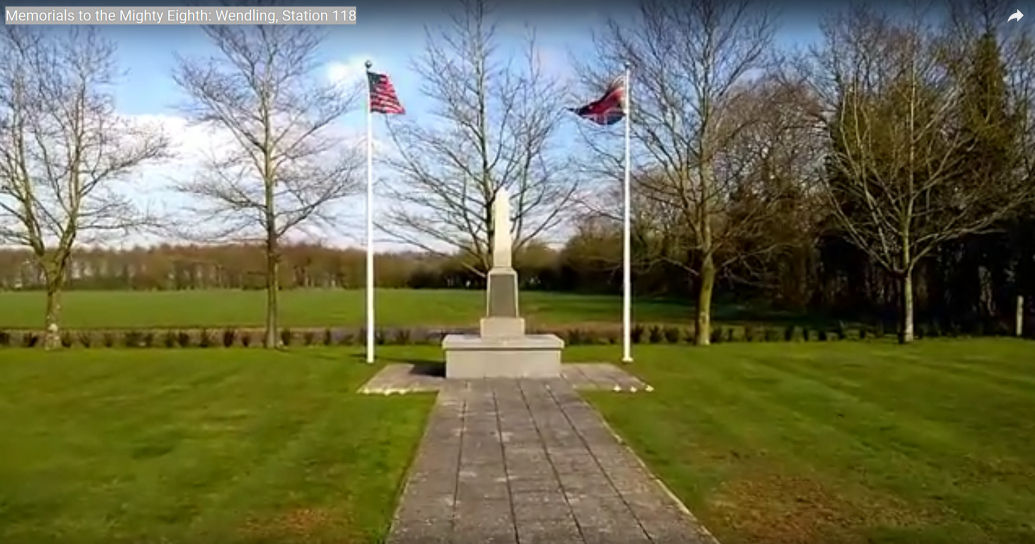
The 392nd Bomb Group Memorial
One of the most important reminders of the station's wartime service is the memorial dedicated to the officers and enlisted men of the 392nd Bombardment Group. Located near the former airfield, the memorial serves as a place of remembrance for those who flew from RAF Wendling and especially for those who never returned.
Visitors from the United States, Great Britain, and many other nations regularly stop to pay tribute to the sacrifices of the "Greatest Generation." Memorial ceremonies held throughout the years have reinforced the enduring friendship between the people of Norfolk and the veterans who once called RAF Wendling home.
The 392nd Bomb Group Memorial
A memorial near the former airfield honors the officers and enlisted men of the 392nd Bombardment Group who served at Wendling. It provides a permanent place of remembrance for veterans, families, local residents, historians, and visitors.
The memorial symbolizes the enduring relationship between the American servicemen and the Norfolk communities that welcomed them during the war. Ceremonies and commemorative visits continue to preserve the memory of the men who flew and supported combat missions from Station 118.
The 392nd Bomb Group Memorial Association
Following the war, veterans of the 392nd Bombardment Group established organizations dedicated to preserving the history, friendships, and memories forged during combat service. Annual reunions provided former crew members, ground personnel, and their families with opportunities to renew friendships while honoring those who had made the ultimate sacrifice.
As the years pass and the number of surviving veterans are almost all gone, the mission of preserving the group's history increasingly passed to their children, grandchildren, historians, archivists, and dedicated volunteers. Through countless hours of research, oral history interviews, artifact preservation, and publication projects, these individuals ensured that the remarkable achievements of the 392nd Bombardment Group would not be forgotten.
Among the organizations playing a leading role in this effort has been the 392nd Bomb Group Memorial Association Second Generation, who have collected photographs, mission reports, combat records, personal memoirs, aircraft histories, casualty records, and other invaluable historical materials. Their work has preserved one of the most complete collections documenting any Eighth Air Force bombardment group through its website: www.b24.net.
The Association's efforts have extended far beyond preserving artifacts. Reunions, memorial services, publications, restoration projects, historical research, and cooperation with museums in both the United States and the United Kingdom have helped ensure that future generations understand the sacrifices made by the men who served at RAF Wendling.

392nd Bomb Group Roll of Honor: Roll of Honor
Oversea Burials 392nd Bomb Group Oversea Burials
Group Web Site http://www.b24.net