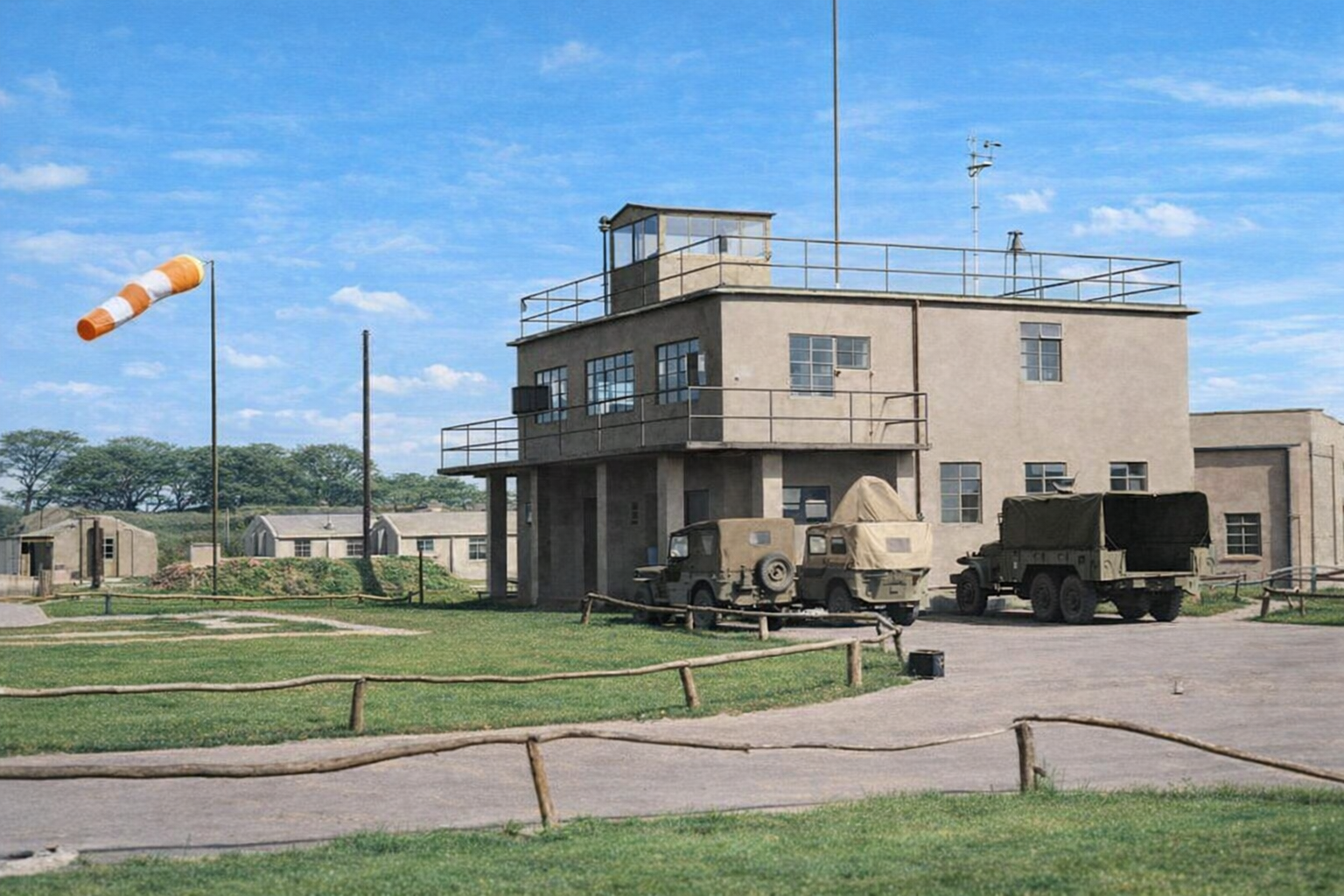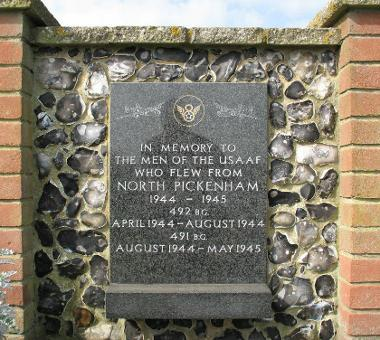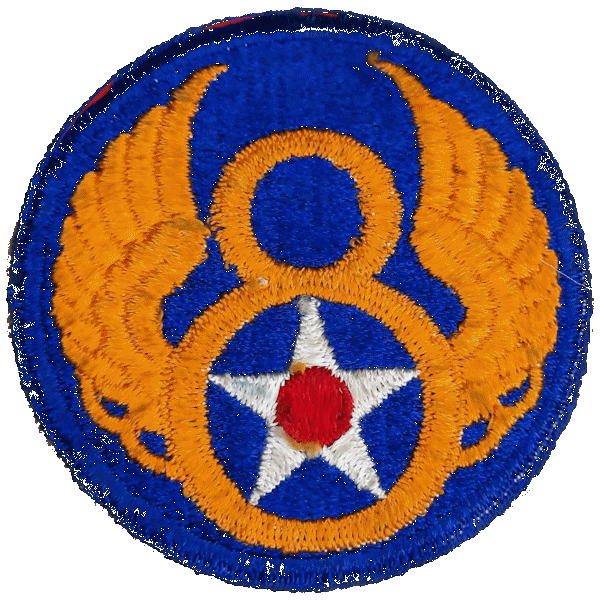
RAF North Pickenham, designated USAAF Station 143 and identified by the station code NP, was a wartime heavy-bomber airfield in Norfolk, England. Constructed during 1942–1943, it became part of the network of East Anglian bases from which the United States Army Air Forces carried the strategic air war into German-occupied Europe. Although its period as an operational American bomber station lasted only about sixteen months, North Pickenham became closely associated with two B-24 Liberator organizations of the Eighth Air Force's Second Air Division: the 492nd and 491st Bombardment Groups.
The history of the station is inseparable from the extraordinary story of the 492nd Bombardment Group. The 492nd began combat operations from North Pickenham in May 1944, suffered devastating losses during a brief daylight-bombing career, and became remembered as the "Hard Luck Group." After the original organization was withdrawn from conventional bombing, its designation was transferred to a special-operations unit at RAF Harrington that supported resistance movements behind enemy lines. North Pickenham then became the combat home of the 491st Bombardment Group for the remainder of the war in Europe.
Construction of RAF North Pickenham
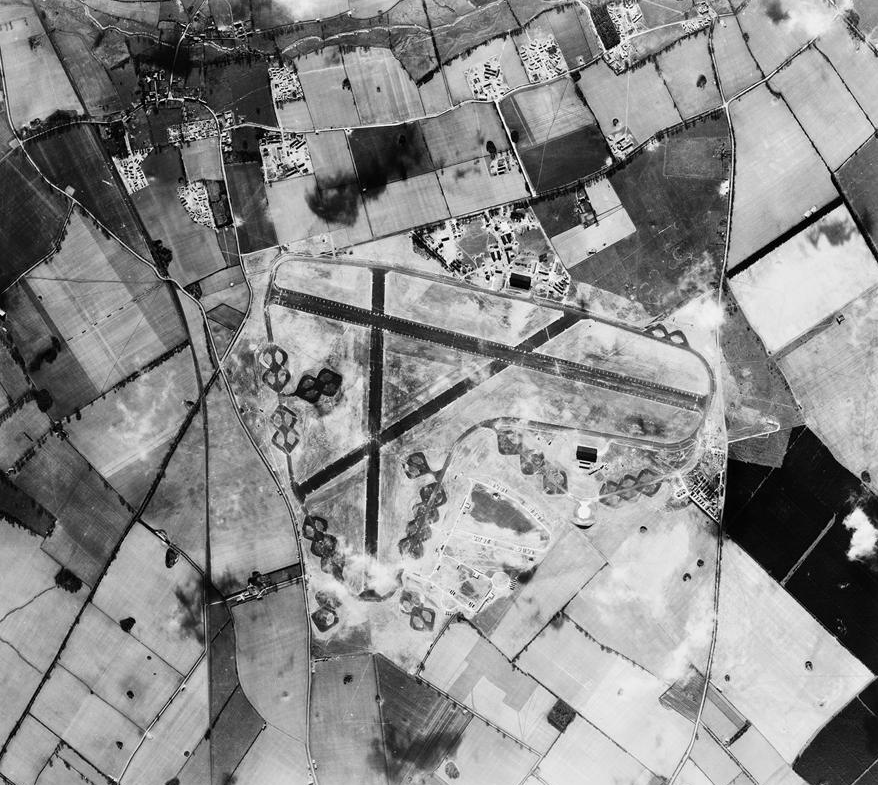
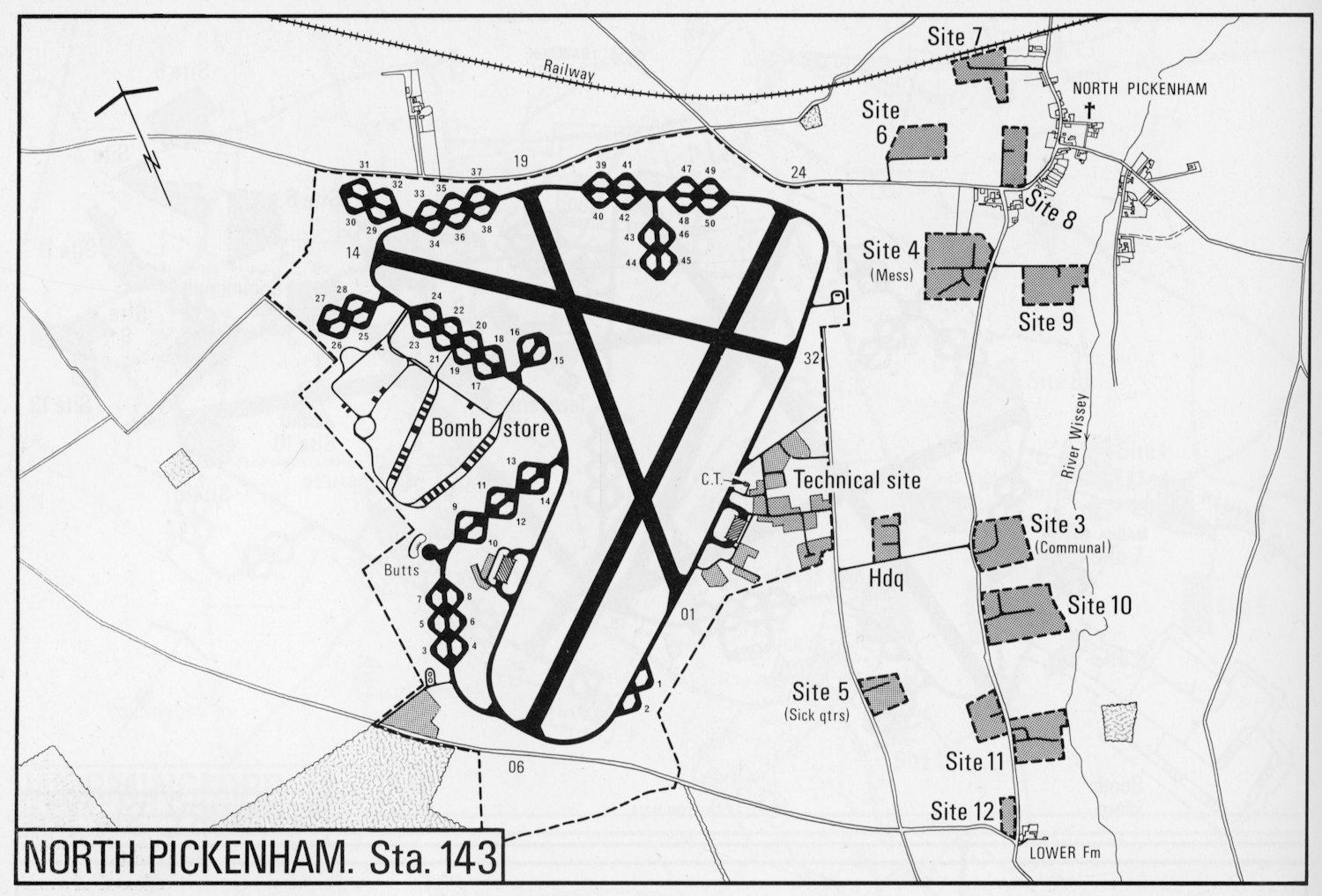
North Pickenham was constructed on farmland near the Norfolk villages of North Pickenham and South Pickenham. Like the other permanent heavy-bomber stations built in Britain during the wartime expansion program, it followed the general Class A airfield pattern. Its three concrete runways formed the familiar triangular arrangement that allowed aircraft to take off and land as nearly into the prevailing wind as possible.
The airfield's principal operational features included:
The dispersal of facilities was an important feature of wartime airfield design. Aircraft were parked around the perimeter rather than concentrated in one location, while barracks, mess halls, administrative buildings, sick quarters, recreation rooms, and other support sites were separated from the runways and technical area. This arrangement reduced congestion and limited the damage that could result from an enemy air attack or an accidental explosion.
Formation of the 492nd Bombardment Group
The 492nd Bombardment Group (Heavy) was activated in the United States on 1 October 1943. Its four original operational squadrons were the 856th, 857th, 858th, and 859th Bomb Squadrons. Equipped with Consolidated B-24 Liberators, the group trained in long-range navigation, high-altitude formation flying, precision bombing, aerial gunnery, radio communications, aircraft maintenance, and emergency procedures. Aircrews and ground personnel completed their final training at Alamogordo Army Air Field, New Mexico, before deploying overseass in the spring of 1944.
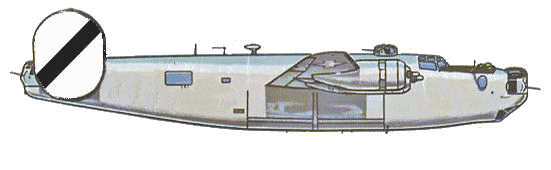
The group arrived at North Pickenham during April 1944, with 18 April generally recognized as the date of its establishment at the station. Its B-24s carried the Second Air Division's Circle-U group marking.
The four squadrons and their fuselage codes were:
Beginning Combat Operations
The 492nd flew its first combat mission on 11 May 1944 against the marshalling yards at Mulhouse, France. Entering combat during the critical weeks before the Allied invasion of Normandy, the group joined the Eighth Air Force offensive against German industry, transportation, airfields, coastal defenses, and military installations.
During its conventional bombing phase, the group attacked aircraft factories, railroad marshalling yards, V-weapon sites, airfields, ports, bridges, synthetic-oil installations, and other strategic targets in Germany and occupied Europe. Its missions included objectives in and around Brunswick, Munich, Hamburg, Kiel, Politz, Magdeburg, Cologne, and numerous other strongly defended industrial centers.
The group's Liberators frequently flew deep into enemy territory, where crews faced concentrated antiaircraft fire, German fighter attacks, rapidly changing weather, mechanical failures, and missions lasting many hours. North Pickenham's ground crews worked around the clock to repair damaged aircraft, load bombs and ammunition, service engines, and prepare the Liberators for the next operation.
Support of the Normandy Campaign
Because the 492nd entered combat shortly before D-Day, many of its early operations supported preparations for the invasion and the Allied armies after they landed in France. The group struck airfields, transportation centers, bridges, coastal defenses, and other targets intended to hinder German reinforcement of the Normandy front. These tactical assignments were flown alongside the group's continuing participation in the broader strategic bombing campaign.
The "Hard Luck Group"
Within weeks of entering combat, the 492nd began suffering losses at a rate almost without parallel among Eighth Air Force heavy-bomber groups. Its relatively inexperienced formations were repeatedly exposed to intense fighter opposition and antiaircraft fire on deep penetrations into enemy territory.
The mission to the synthetic-oil plant at Politz on 20 June 1944 became the most disastrous day in the group's history. Fourteen of the 492nd's B-24s were lost. The oil target was of great strategic importance because Germany depended upon synthetic fuel for its aircraft, armored forces, and transportation system, but it lay deep within enemy territory and was heavily defended.
Additional severe losses followed. Seven aircraft were lost during a mission to Hamburg on 29 June. Other costly operations during June and July further depleted the group's crews and aircraft. Replacement personnel and Liberators could not restore operational strength quickly enough to overcome the extraordinary attrition.
By early August 1944, after only 67 credited combat missions, the 492nd had lost more than fifty B-24s from combat and operational causes. Hundreds of its officers and enlisted men had been killed, wounded, captured, or reported missing. The short, costly campaign gave rise to the enduring name "The Hard Luck Group," but the record behind that title was one of persistence and courage under exceptionally difficult conditions.
Withdrawal from Daylight Bombing
The 492nd was removed from conventional daylight strategic bombing in early August 1944. Its final mission from North Pickenham was flown on 7 August. The original organization was broken up, with surviving crews, ground personnel, and aircraft transferred principally to other B-24 units of the Second Air Division. This redistribution helped reinforce groups that had themselves suffered heavy losses during the summer campaign.
The withdrawal ended the original 492nd's short operational career at North Pickenham, but it did not end the wartime history of the designation. At the same time, North Pickenham was prepared to receive another experienced Liberator group.
The 492nd and the Carpetbagger Mission
In August 1944, the 492nd Bombardment Group designation was transferred to RAF Harrington (USAAF Station 179), where it absorbed the personnel and work of the 801st Bombardment Group (Provisional). The reorganized 492nd was therefore substantially different from the original group that had fought from North Pickenham. Its new assignment was the highly secret Carpetbagger mission in support of Allied intelligence services and resistance forces in occupied Europe.
Carpetbagger crews flew specially modified, predominantly black-painted B-24s on clandestine night missions. Bomb-bay installations were adapted to carry supply containers, and specialized navigation, communications, and agent-dropping equipment replaced some conventional bomber equipment. The reorganized group also operated other aircraft types for special duties, training, and transport.
Flying at low altitude and often relying on moonlight, visual checkpoints, coded signals, and primitive radio aids, crews delivered weapons, ammunition, explosives, radios, medical supplies, clothing, food, and sabotage equipment to resistance organizations. They also inserted Allied agents and special teams into occupied territory. These operations supported the Office of Strategic Services, Britain's Special Operations Executive, and associated Allied organizations in France, Belgium, the Netherlands, Denmark, Norway, and elsewhere.
The Carpetbagger missions demanded precise navigation and exceptional nerve. Crews had to locate small drop zones in darkness while avoiding German radar, searchlights, antiaircraft fire, and night fighters. Their work helped resistance forces disrupt railroads, bridges, communications, and German military movements and supplied intelligence networks operating behind enemy lines.
The 492nd continued special operations into the final months of the European war. It received a Distinguished Unit Citation for operations over Germany and German-occupied territory from 20 March through 25 April 1945. The French government also awarded the group the Croix de Guerre with Palm for its support of the French Resistance during 1944. After Germany's surrender, the group flew transport and support missions before returning to the United States later in 1945.
Arrival of the 491st Bombardment Group
After the original 492nd departed, the 491st Bombardment Group transferred to North Pickenham from RAF Metfield in August 1944. Its move ensured that Station 143 remained an active Second Air Division heavy-bomber base. The 491st's four squadrons—the 852nd, 853rd, 854th, and 855th Bomb Squadrons—continued flying B-24 Liberators from the airfield until the end of the war in Europe.
From North Pickenham, the 491st attacked oil facilities, industrial plants, communications centers, railroad targets, and other objectives across Germany. The group earned a Distinguished Unit Citation for its 26 November 1944 mission against the synthetic-oil refinery at Misburg. Despite severe weather, heavy antiaircraft fire, and fighter opposition, its crews pressed the attack against this vital target.
The 491st also supported Allied ground operations during the Battle of the Bulge and the advance into Germany. Its final combat operations came in April 1945. Following the end of hostilities in Europe, the group prepared for redeployment, and its departure brought North Pickenham's service as an operational American heavy-bomber station to a close.
Daily Life at Station 143
North Pickenham was more than runways, hangars, and aircraft. It was a temporary wartime community occupied by thousands of American servicemen and British civilian employees. Flying operations depended upon armorers, mechanics, engineers, radio specialists, meteorologists, medical personnel, clerks, cooks, drivers, and many other ground-support workers.
Life at the station alternated between routine and crisis. Briefings began before dawn, engines were tested and aircraft assembled for takeoff, and ground crews waited anxiously for the returning formations. Damaged bombers sometimes landed with wounded men aboard, failed landing gear, or engines stopped. Empty hardstands were visible reminders of crews that had not returned. Relations with nearby Norfolk communities also became part of station life, and friendships formed during the war continued long after American personnel went home.
Postwar History of RAF North Pickenham
After the departure of the United States Army Air Forces, North Pickenham returned to British control. The station was used for storage and other support purposes before acquiring an important Cold War role. From 1959 to 1963 it was one of the Royal Air Force sites equipped with American-built Thor intermediate-range ballistic missiles. The missiles formed part of Britain's nuclear deterrent during one of the tensest periods of the Cold War.
The airfield was also associated with trials of the Hawker P.1127, the experimental vertical/short takeoff and landing aircraft that led to the development of the Harrier. North Pickenham finally closed as an active Royal Air Force station in 1967.
What Remains Today
Much of the former flying field has returned to agricultural and industrial use, and later development—including a large poultry enterprise—has altered the wartime landscape. Nevertheless, portions of the runways, perimeter track, hardstands, roads, bomb-storage area, and a number of wartime structures remain identifiable. These surviving features preserve the outline of the airfield and help visitors understand its former size and purpose.
Memorials at and near the former station honor the 492nd and 491st Bomb Groups and the men who served there. A memorial bench and commemorative plaque dedicated during a Second Air Division reunion in 1987 are among the tributes that preserve the connection between North Pickenham, the American airmen, and the surrounding Norfolk communities.
Historical Significance
RAF North Pickenham occupies a distinctive place in Second Air Division history. It was the combat home of the original 492nd Bombardment Group, whose crushing losses during only a few months of daylight operations became one of the most poignant stories of the Eighth Air Force. The 492nd designation then acquired a second legacy through the hazardous Carpetbagger missions flown from Harrington. Finally, North Pickenham served as the wartime home of the 491st Bombardment Group during the final drive against Germany.
The service performed from Station 143—by combat crews, ground personnel, support units, and the neighboring British communities—formed part of the immense Allied effort that achieved victory in Europe. The surviving airfield remains and memorials ensure that the courage, sacrifice, and accomplishments of the 492nd and 491st Bomb Groups will continue to be remembered.
492nd Bomb Group Squadrons
856th Bombardment Squadron, 1943–1945
857th Bombardment Squadron, 1943–1945
858th Bombardment Squadron, 1943–1945
859th Bombardment Squadron, 1943–1945
406th Bombardment Squadron, 1945
Principal 492nd Bomb Group Stations
Alamogordo Army Air Field, New Mexico — October 1943
RAF North Pickenham, England — April 1944
RAF Harrington, England — August 1944
492nd Bomb Group Campaigns
Air Offensive, Europe; Normandy; Northern France; Southern France; Rhineland; and Central Europe.
492nd Bomb Group Decorations
Distinguished Unit Citation for special night operations over Germany and German-occupied Europe, 20 March–25 April 1945; and French Croix de Guerre with Palm for operations supporting the French Resistance during 1944.

492nd Bomb Group Roll of Honor: Roll of Honor
Oversea Burials 492nd Bomb Group Oversea Burials
Group Web Site http://www.492ndbombgroup.com/